
Table of Contents
If you’re living in a house where every meal, craft project, or simple walk through the yard somehow results in mysterious stains that appear on your favorite clothes like they’re magnetically attracted to expensive fabric, and you’ve become an expert at discovering discoloration hours later when it’s already set into permanent decoration, these stain removal tricks are for you.
You know that sinking feeling when you notice a giant red stain on your white shirt and realize you have no memory of how it got there, followed by the desperate googling of “how to remove [mystery substance] from fabric” while the stain laughs at you from its new permanent home in your wardrobe.
You thought stains were just part of life that you’d deal with on laundry day, but then you learned that waiting even a few hours can turn temporary accidents into permanent fabric damage, and suddenly you’re mourning perfectly good clothes that died preventable deaths because you didn’t know basic stain removal tricks.
Here’s what saved me from having to replace half my wardrobe due to preventable stain disasters: I stopped treating stains as laundry day problems and started using immediate stain removal tricks that actually work when applied quickly. This isn’t about becoming a professional dry cleaner or memorizing complex chemical formulas – this is about knowing simple emergency techniques that can save your clothes before damage becomes permanent.
Why Immediate Stain Removal Tricks Are Essential
Look, I get the appeal of dealing with stains later when you have time to research proper treatment methods and gather appropriate supplies. It feels more organized to handle all laundry tasks together instead of dropping everything for emergency fabric care. But here’s what nobody tells you about stain treatment: time is your enemy, and waiting almost always makes things worse.
Effective stain removal tricks work because they address spills and accidents while they’re still fresh and haven’t bonded permanently with fabric fibers. When you act quickly, even stubborn substances can often be removed completely with simple household items.
The biggest advantage of knowing immediate stain removal tricks? It transforms you from someone who watches helplessly as accidents become expensive clothing replacements into someone who can save favorite garments from preventable damage.
My Stain Removal Disaster Education
Picture this: Last month, I was wearing my favorite white blouse while making dinner when I somehow got a splash of marinara sauce right across the front. Instead of dealing with it immediately, I figured I’d handle it during my weekend laundry routine and just changed into a different shirt.
By Sunday, that small red splash had set into a permanent orange-brown stain that looked like abstract art but definitely not the kind you want to wear to work. What could have been a thirty-second cold water rinse became a tragic loss of a shirt I’d loved and worn regularly for two years.
The breaking point came when I realized this wasn’t the first time I’d lost perfectly good clothes to preventable stain disasters. I had a graveyard of favorite garments that died because I treated fresh spills as future problems instead of present emergencies requiring immediate action.
That’s when I realized the problem wasn’t the accidents themselves – it was my complete ignorance about basic stain removal tricks that could have prevented most of my clothing casualties.
The Proven 5-Step Stain Removal Tricks That Actually Work
This emergency approach focuses on immediate action using readily available household items. Here are 5 stain removal tricks that can save your clothes when applied quickly:
Step 1: Act Immediately – Don’t Let Stains Set
The moment you notice a stain, stop whatever you’re doing and address it immediately. Fresh stains respond to simple treatments that become completely ineffective once the substance dries or sets into fabric fibers.
Remove any solid material gently without rubbing it deeper into the fabric. Scrape or blot, but never grind stains into clothing because that pushes them deeper and makes removal much more difficult.
If you can’t treat the stain properly right away, at least rinse it with cold water to prevent setting. Even this basic step can make the difference between successful removal and permanent damage.
Step 2: Use Cold Water First – Never Hot
Always start stain removal tricks with cold water, regardless of the stain type. Hot water can set many stains permanently by cooking proteins or melting substances into fabric fibers where they become impossible to remove.
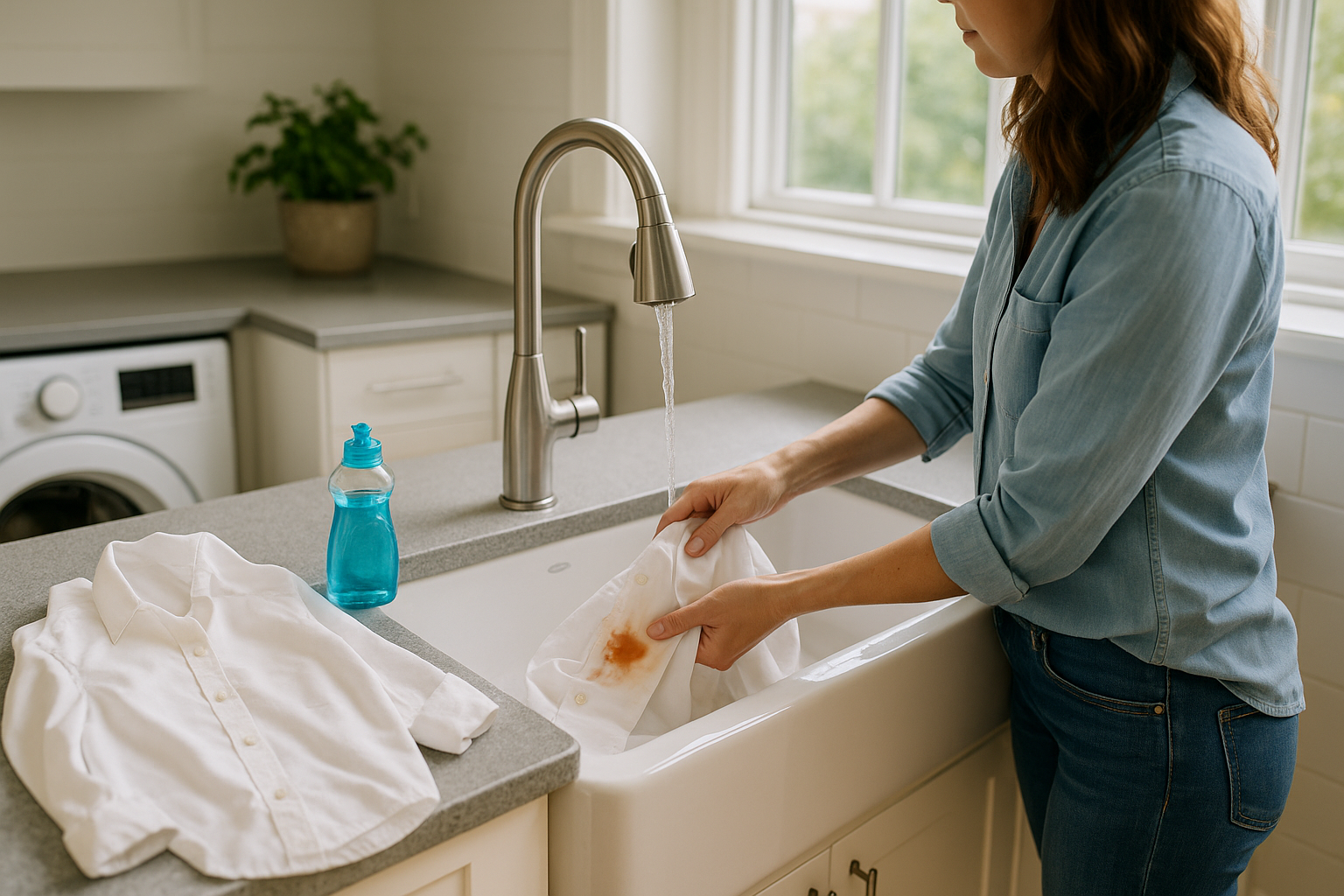
Run cold water through the back of the stained area to push the substance out of the fabric rather than deeper into it. Let the water flow forcefully enough to flush out the stain material.
Continue rinsing until water runs clear or no more stain material appears to be coming out. This step alone can completely remove many fresh stains without requiring additional treatment.
Step 3: Apply Dish Soap for Grease and Protein Stains
For food stains, grease spots, or protein-based accidents, apply a small amount of liquid dish soap directly to the stained area. Dish soap breaks down oils and proteins effectively without damaging most fabrics.
Work the soap gently into the fabric with your fingers, creating a light lather. Don’t scrub aggressively – let the soap’s chemistry do the work of breaking down the stain compounds.
Rinse thoroughly with cold water after soap treatment. You may need to repeat the soap application for stubborn stains, but multiple gentle treatments work better than one harsh scrubbing session.
Step 4: Blot Don’t Rub – Proper Technique Matters
When working with stain removal tricks, always blot stains from the outside toward the center to prevent spreading. Rubbing or circular motions can spread stains and damage fabric fibers.
Use clean white cloths or paper towels for blotting to avoid transferring dyes from colored materials onto your stained garment. Change blotting materials frequently to prevent redepositing removed stain material.
Work patiently with gentle pressure rather than aggressive force. Effective stain removal takes time and technique, not brute strength that can damage clothing.
Step 5: Rinse Thoroughly and Check Results
After treatment, rinse the area completely with cold water to remove all soap residue and loosened stain material. Soap residue left in fabric can attract dirt and create new problems.
Check the treated area carefully in good light to ensure complete stain removal before proceeding with normal laundry. Partial removal that looks successful in poor lighting may become obvious once the garment dries.
If stains remain after emergency treatment, don’t put the item in the dryer. Heat sets stains permanently, so air dry and try additional treatment methods before applying any heat during the laundry process.
Why These Stain Removal Tricks Work So Well
Look, I’m not going to pretend that immediate treatment can save every garment from every type of accident (some substances and some fabrics just don’t play well together). But these techniques solved the biggest problems that were costing me money and favorite clothes:
Prevents stain setting through quick action. Immediate treatment addresses spills while they’re still fresh and removable, before they bond permanently with fabric fibers.
Uses readily available household items. Cold water and dish soap handle most common stains effectively without requiring specialty products or professional cleaning services.
Works with fabric chemistry rather than against it. Proper technique helps remove stains instead of setting them deeper or damaging clothing through inappropriate treatment methods.
Saves money on clothing replacement. Successful emergency stain removal tricks can prevent the need to replace expensive garments damaged by preventable accidents.
Builds confidence around accidents. When you know how to handle spills immediately, minor accidents become manageable problems rather than wardrobe disasters.
Common Stain Removal Tricks Mistakes (That Ruin Clothes)
Using hot water on fresh stains. Heat sets many stains permanently by cooking proteins or melting substances into fabric where they become impossible to remove later.
Rubbing stains aggressively. Harsh scrubbing pushes stains deeper into fabric fibers and can damage clothing texture and appearance permanently.
Mixing cleaning products without knowledge. Some combinations create harmful reactions or set stains worse than leaving them untreated.
Using colored cloths for blotting. Dyes from cleaning materials can transfer to stained garments, creating additional problems beyond the original accident.
Putting treated items in the dryer before confirming complete removal. Heat from dryers sets any remaining stain material permanently, making successful removal impossible.
Advanced Stain Removal Tricks for Specific Situations
Different stain types respond better to specific treatments beyond basic water and soap approaches. Blood responds to cold water and hydrogen peroxide, while grease stains benefit from cornstarch absorption before soap treatment.
Learn to identify stain types quickly so you can choose appropriate emergency treatments. Protein stains, tannin stains, and oil stains require different approaches for optimal removal success.
Keep basic stain removal supplies easily accessible – cold water, liquid dish soap, white cloths, and hydrogen peroxide handle most common household accidents effectively.
Building Your Emergency Stain Kit
Stock readily accessible locations with basic stain removal tricks supplies – kitchen sink, laundry room, and main bathroom should have dish soap and clean white cloths available.
Consider portable stain removal options for accidents that happen away from home – stain removal pens, small soap containers, or wet wipes designed for fabric care.
Maintain emergency contact information for professional dry cleaners who can handle stains that exceed home treatment capabilities, especially for expensive or delicate garments.
Teaching Family Members Basic Stain Care
Show everyone in your household basic stain removal tricks so they can handle their own accidents immediately rather than letting stains set while waiting for help.
Emphasize the importance of immediate action and proper technique over perfect results. Quick response with basic methods works better than delayed professional treatment.
Create simple written instructions for common stain types that family members can follow during emergencies when thinking clearly becomes difficult.
The Stain Removal Tricks Reality Check
Will learning emergency treatment methods prevent all clothing damage or eliminate the need for professional cleaning services? Of course not – some stains and some fabrics require expert care regardless of immediate treatment. Will it save many favorite garments from preventable damage? Absolutely.
The goal of immediate stain removal tricks isn’t replacing professional cleaning services or handling every possible fabric emergency. The goal is providing emergency damage control that prevents minor accidents from becoming major clothing losses.
I still take delicate items to professional cleaners for complex stains, but now I can handle most common household accidents successfully without losing clothes to preventable damage.
Prevention and Preparedness Strategies
Once you understand basic emergency stain removal tricks, focus on prevention strategies that reduce accident frequency – aprons during cooking, protective clothing during messy activities, and awareness of stain-prone situations.
Some families benefit from keeping extra clothing accessible for quick changes after accidents, reducing the pressure to achieve perfect stain removal under emergency conditions.
Understanding fabric care labels and stain removal limitations helps you make better decisions about when to attempt home treatment versus seeking professional help immediately.
The stain removal tricks system isn’t about becoming a fabric care expert or eliminating all accidents from daily life. It’s about having immediate response options that can save clothing from preventable damage while you navigate the messy realities of cooking, eating, and living in the real world.
Because life’s too messy to lose your favorite clothes to preventable stain disasters when you could learn simple emergency techniques that actually work before damage becomes permanent.