
Table of Contents
If you’re living in a house where every single request from your kids turns into a complex decision-making process that would challenge Supreme Court justices, and you’ve become a human Magic 8-Ball who spends more time saying “no” than actually breathing while your children have perfected the art of asking for exactly what you don’t want to give them at the worst possible moments, this yes basket system is for you.
You know that soul-crushing exhaustion that comes from being asked seventeen different questions before 9 AM about snacks you don’t have, toys you can’t find, and activities that require your immediate supervision when all you wanted was to drink one cup of coffee while it was still hot and maybe remember what silence sounds like.
You thought being a responsive parent meant considering every request thoughtfully, but instead you’ve created tiny humans who’ve learned that persistence is the key to wearing down your defenses, turning every simple “Can I have…” into a negotiation that requires more energy than international peace treaties and somehow always ends with you being the bad guy.
Here’s what saved me from becoming a full-time request referee: I stopped making individual decisions about predictable asks and started using a strategic yes basket system that gives kids automatic approval for parent-approved choices. This isn’t about spoiling kids or giving them unlimited access to everything – this is about creating boundaries that feel like freedom while actually saving your sanity.
Why Yes Basket System Is the Only Method That Works
Look, I get the appeal of maintaining control over every single item your kids consume or play with. It feels so responsible to evaluate each request based on timing, nutrition, mess potential, and your current energy levels. But here’s what nobody tells you about that approach: you become a human vending machine that requires complex negotiations for every transaction.
A strategic yes basket system works because it eliminates the decision fatigue that comes with managing constant requests while still maintaining parental control over what’s available. Kids get the satisfaction of independent choice-making, and you get the relief of not having to think about every single snack or toy request.
The biggest advantage of a yes basket system? It transforms you from the person who’s always saying no to the person who created a system where kids can say yes to themselves within boundaries you’ve already approved.
My Disaster Before the Yes Basket System
Picture this: Every single day involved at least forty-seven requests for snacks, toys, activities, and various forms of entertainment that required me to stop whatever I was doing, evaluate the appropriateness of the request, consider timing and circumstances, and then either grant permission or explain why the answer was no, usually while someone whined about my decision-making process.
My five-year-old had developed the supernatural ability to ask for the one snack we didn’t have or the one toy that was currently lost under the couch. My three-year-old would ask for a snack, get approved for crackers, then immediately ask if he could have different crackers, then different crackers again, turning snack time into an endless loop of micro-decisions.
The breaking point came when I realized I’d spent an entire morning saying “no” to requests for things I would have been fine with if I’d just thought to make them available proactively. I was creating power struggles over things that didn’t actually matter while exhausting myself with constant decision-making about predictable childhood needs.
That’s when I realized the problem wasn’t my kids’ requests – it was the lack of a system that handled predictable needs without requiring my individual approval for every single thing.
The Ultimate 5-Step Yes Basket System That Actually Works
This yes basket system approach is embarrassingly simple, but it’s eliminated about 80% of daily requests and power struggles in our house. Here’s the 5-step system that gave me back my voice and my sanity:
Step 1: Choose the Right Container and Location
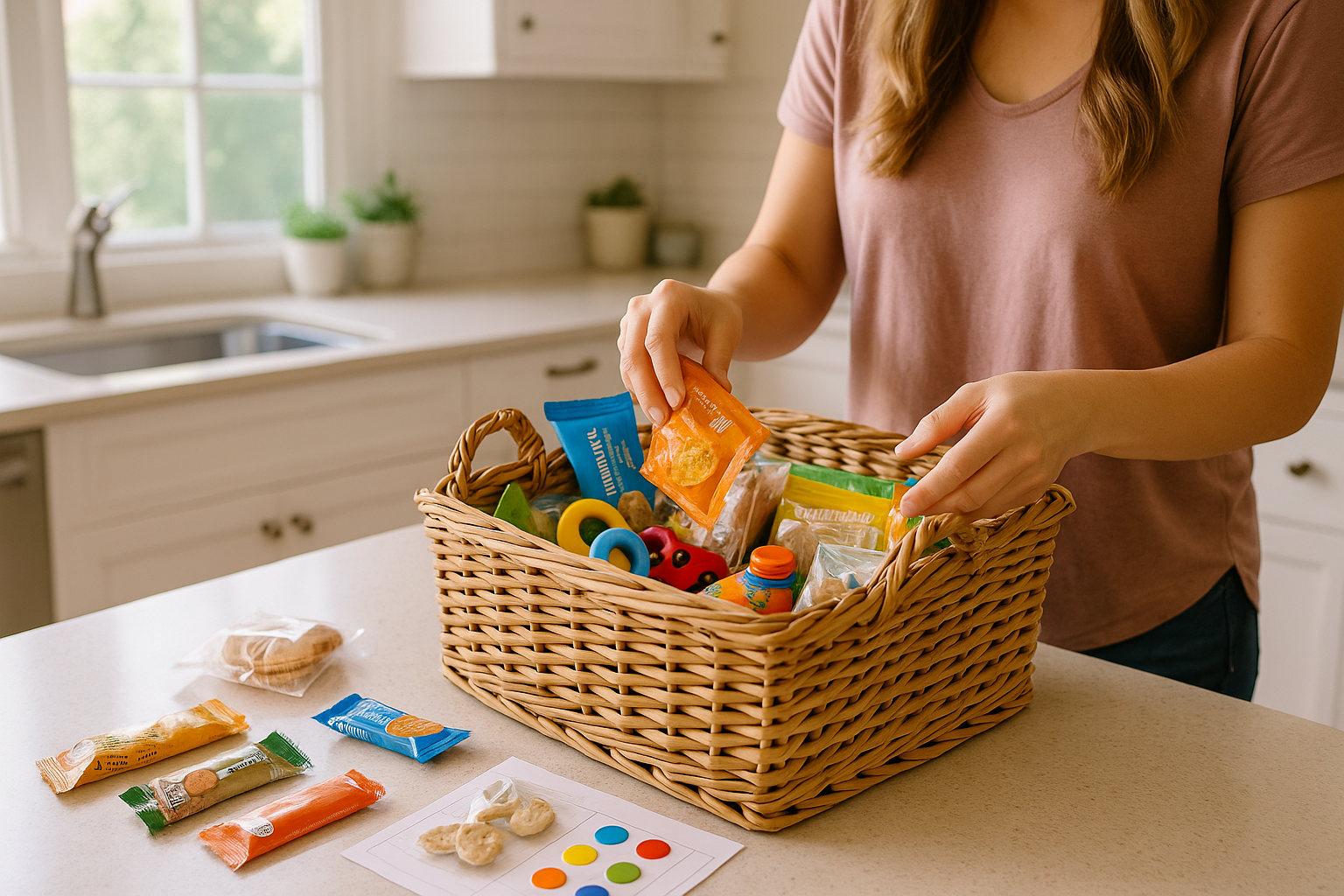
Select a basket or container that’s easily accessible to kids but visible to you for monitoring and restocking. I use a medium wicker basket on our kitchen counter, but a low cabinet, designated drawer, or shelf works too. The key is making it obviously different from regular storage so kids know this is their “always yes” zone.
Make sure the location doesn’t interfere with meal times or create grazing opportunities that spoil appetite. Kitchen counter works if your kids don’t typically hang out there between meals, but you might prefer a pantry shelf or living room location depending on your house layout.
Keep the yes basket system container attractive and organized so it feels special rather than like a dumping ground. Kids are more likely to respect and appreciate a system that looks intentional and cared for.
Step 2: Stock With Parent-Approved Options
Fill your yes basket system with snacks and small items you’re always comfortable saying yes to. This might include individual bags of crackers, fruit pouches, small toys, coloring supplies, or quiet activities that don’t require supervision or create major messes.
Choose items that won’t spoil quickly, don’t require preparation, and won’t ruin appetite if consumed between meals. I include things like granola bars, small crackers, stickers, fidget toys, and travel-sized activities that provide satisfaction without creating problems.
Avoid anything that requires adult help to open, creates significant mess, or would be inappropriate at any time of day. The yes basket system only works if everything in it truly gets an automatic “yes” regardless of timing or circumstances.
Step 3: Establish Clear Yes Basket System Rules
Create simple, non-negotiable rules about how the yes basket system works. In our house, kids can take one item at a time without asking, but they need to finish or put away the first item before taking something else. No hoarding, no saving items for later, no taking things to bedrooms.
Make it clear that items in the yes basket are always available without permission, but anything outside the basket still requires asking. This teaches kids the difference between automatic approval and things that need discussion.
Explain that the yes basket system replaces random snack and toy requests. If they want something that’s not in the basket, they can ask, but the basket contains everything that’s automatically approved without negotiation.
Step 4: Rotate Contents Regularly
Refresh your yes basket system contents weekly or bi-weekly to maintain interest and prevent boredom. Kids stop appreciating automatic access if the same items sit there indefinitely, and you want to keep the basket feeling like a source of pleasant surprises.
Pay attention to what disappears quickly and what gets ignored. If nobody ever takes the pretzels but the fruit snacks vanish immediately, adjust your stocking accordingly to maintain balanced options that actually get used.
Consider seasonal rotations or special themes – maybe back-to-school supplies in August, small holiday treats in December, or outdoor toys in summer. This keeps the yes basket system feeling fresh and relevant.
Step 5: Handle Requests Outside the System Consistently
When kids ask for things that aren’t in the yes basket, calmly redirect them to check the basket first before making additional requests. “Did you look in the yes basket? Everything in there is available without asking.”
Don’t feel obligated to add requested items to the basket immediately. The yes basket system contains your pre-approved choices, not a constantly expanding collection of everything kids think of wanting.
If kids complain that the yes basket doesn’t have what they want, acknowledge their disappointment without changing the system. “I understand you wanted something different. The basket has the snacks that are always available, and you can ask me about other things.”
Why This Yes Basket System Works So Well
Look, I’m not going to pretend this yes basket system turned my kids into grateful angels who never ask for anything beyond what’s provided (that would require personality transplants and possibly sedatives). But it solved the biggest problems that were making me feel like a human request-processing machine:
Eliminates constant permission-seeking for approved items. When kids know certain things are automatically available, they stop asking for permission and just take care of their own needs independently.
Reduces decision fatigue for parents. Instead of evaluating every single snack or toy request, you make decisions once when stocking the basket and then let the system work.
Creates positive independence for kids. Children get the satisfaction of making their own choices and meeting their own needs without having to negotiate or wait for adult approval.
Prevents power struggles over predictable requests. When snacks and activities are pre-approved and available, there’s nothing to argue about or resist.
Teaches kids about boundaries and choices. The yes basket system shows kids that freedom comes with limits – they can choose anything from approved options without restriction.
Common Yes Basket System Mistakes (That I Definitely Made)
Including items that require adult supervision or help. I initially put craft supplies that needed assistance and snacks that required opening help, which defeated the purpose of independent access.
Making the basket too large or overwhelming. My first attempt included too many options, which created decision paralysis rather than easy choice-making for kids.
Forgetting to rotate contents regularly. When the same items sat in the yes basket for weeks, kids stopped checking it and went back to making individual requests for everything.
Adding requested items immediately to avoid complaints. When kids asked for specific things to be added to the basket, I sometimes caved to avoid whining, which taught them that lobbying could change the pre-approved options.
Not establishing clear rules about quantity and timing. Without limits on how many items kids could take or when they could access the basket, it became a free-for-all that spoiled meals and created new problems.
What About Nutrition and Balance?
You’re still controlling what goes into the yes basket system, so you’re still making the nutritional and appropriateness decisions. The difference is you’re making them proactively during stocking time instead of reactively during stressful moments when kids are asking for things.
Include a variety of options that you feel good about nutritionally and developmentally. The yes basket doesn’t have to be perfect – it just needs to contain things you’re always comfortable with kids having access to.
Consider including one small “treat” option alongside healthier choices so kids don’t feel like the basket is just health food they have to settle for. Balance prevents the forbidden fruit effect while maintaining your standards.
Handling Different Ages with Yes Basket System
Toddlers need very simple yes basket contents – things they can handle independently without choking hazards or complicated packaging. Board books, large crayons, and simple snacks work well.
Preschoolers can handle slightly more complex items and understand rules about taking one thing at a time. They might enjoy stickers, small puzzles, and individually wrapped snacks.
School-age kids can manage more sophisticated yes basket system contents and can help with restocking and organizing. They can handle craft supplies, more complex snacks, and small responsibility items.
Expanding the Yes Basket System Concept
Once the basic yes basket system is working, you can create themed baskets for different situations – a car yes basket for road trips, a quiet time yes basket for rest periods, or an outdoor yes basket for backyard play.
Some families create individual yes baskets for each child to prevent sibling disputes and allow for age-appropriate or interest-specific contents. This works especially well when children have very different preferences or needs.
Consider rotating special yes baskets for different seasons, holidays, or family situations. A “sick day yes basket” with comfort items and quiet activities can be a lifesaver during illness recovery.
The Yes Basket System Reality Check
Will this yes basket system eliminate every single request and create kids who never want anything beyond what you’ve provided? Of course not – kids will still have preferences, desires, and requests beyond the basket contents. Will it dramatically reduce daily negotiations while teaching valuable lessons about independence and boundaries? Absolutely.
The goal isn’t meeting every possible want or preventing all requests. The goal is handling predictable, reasonable needs proactively so you can save your decision-making energy for things that actually require individual consideration.
I still get requests for things outside the yes basket, but they’re now occasional exceptions rather than constant demands. Kids have learned to check their automatic options first, which eliminates probably 75% of the “Can I have…” questions that used to dominate our days.
Advanced Yes Basket System Strategies
Once kids are comfortable with the basic system, you can tie yes basket privileges to behavior or responsibilities. Maybe the basket is only available after morning routines are complete, or additional special items get added based on helpful choices.
Consider letting older kids help plan and shop for yes basket contents. This teaches them about making thoughtful choices within budgets and considering family needs rather than just individual wants.
Some families use the yes basket system as a foundation for teaching kids about earning and spending – maybe kids can “buy” premium yes basket items with completed chores or good behavior points.
The yes basket system isn’t about spoiling kids or avoiding all boundaries and limits. It’s about creating strategic areas of automatic approval that eliminate unnecessary conflicts while teaching kids valuable lessons about independence, choice-making, and working within established boundaries.
Because life’s too precious to waste saying “no” to things you don’t actually care about when you could create systems that let kids say “yes” to themselves within limits that work for everyone.