
Table of Contents
If you’re living in a house where you cook with oil regularly and you’ve never actually thought about what you’d do if a kitchen fire emergency happened until that terrifying moment when flames suddenly shoot up from your pan and your brain goes completely blank while you’re standing there holding a spatula wondering if this is how your kitchen renovation dreams turn into insurance claims, this grease fire safety guide is for you.
You know that heart-stopping panic that happens when cooking oil ignites and suddenly you’re facing actual flames in your kitchen, and every movie you’ve ever seen flashes through your mind with people throwing water on fires, but somewhere in the back of your brain a little voice is whispering that might be wrong, and now you’re frozen with terror because you have approximately three seconds to make the right decision before things get really bad.
You thought kitchen fires were something that happened to other people who weren’t careful, but then you learned that these emergencies can happen to anyone who’s ever heated oil too hot, left a pan unattended for thirty seconds, or had a cooking disaster escalate faster than you could react, and suddenly you realize you have no actual plan for handling one of the most common household emergencies.
Here’s what saved me from potentially burning down my kitchen when I had my own cooking fire scare: I stopped relying on panic-driven instincts and learned the proper grease fire safety protocol that actually works. This isn’t about becoming a paranoid cook who’s afraid of using oil – this is about knowing exactly what to do in those crucial first moments when quick action can prevent a small problem from becoming a house-destroying disaster.
Why Kitchen Fire Knowledge Is Absolutely Critical
Look, I get the appeal of thinking kitchen fires won’t happen to you because you’re a careful cook who pays attention. It feels reassuring to believe that these emergencies only happen to people who are careless or distracted. But here’s what nobody tells you about grease fires: they can happen to anyone, they happen incredibly fast, and your instinctive reactions are probably exactly wrong.
Proper grease fire safety knowledge works because it overrides your natural panic response with specific, proven steps that actually extinguish fires instead of making them worse. When you know the correct protocol, you can act quickly and confidently instead of standing there paralyzed while flames spread.
The biggest advantage of understanding these procedures? It transforms a potentially catastrophic emergency into a manageable situation that you can handle calmly and effectively, protecting your home, your family, and yourself from serious injury.
My Kitchen Fire Wake-Up Call
Picture this: Last year, I was making dinner and heating oil for frying when my toddler had a meltdown in the next room. I stepped away for what felt like thirty seconds to handle the crisis, and when I came back, the oil was smoking heavily. Before I could even reach for the pan, flames shot up about two feet high from the overheated oil.
My first instinct was to grab the nearest thing to put it out, which happened to be the spray bottle I use for misting plants. Thank God some deeply buried knowledge stopped me from actually spraying water on a grease fire, but I stood there for precious seconds not knowing what to do while the flames got bigger and the smoke alarm started shrieking.
The breaking point came when I realized I had no actual plan despite years of cooking with oil regularly. I was completely unprepared for an emergency that could have destroyed my kitchen or seriously injured my family, and I got lucky that my hesitation didn’t result in disaster.
That’s when I realized the problem wasn’t my cooking skills – it was my complete lack of knowledge and preparation for one of the most common kitchen emergencies that can happen to anyone.
The Essential 4-Step System That Actually Works
This approach isn’t complicated, but it requires specific knowledge and quick action that goes against most people’s natural instincts. Here’s the 4-step system that every home cook needs to know:
Step 1: Turn Off the Heat Source Immediately
The moment you see flames from burning oil, your first action is turning off the heat source – stove burner, electric element, or whatever is heating the oil. Don’t try to move the pan or do anything else first. Heat is feeding the fire, so eliminating the heat source is your priority.
Stay calm and move deliberately. Panic makes people clumsy, and you need to be precise when responding to emergencies. Turn off the heat, but don’t try to move the flaming pan because that can spread burning oil and make the situation much worse.
If you can’t safely reach the heat controls because of flames, skip this step and move to step two. Your priority is always personal safety first, then property protection.
Step 2: Smother the Flames – Never Use Water
This is the most critical part of kitchen fire response: never, ever use water on a grease fire. Water and oil don’t mix, and water will cause the burning oil to splatter and spread the fire dramatically. Instead, you need to smother the flames by cutting off their oxygen supply.
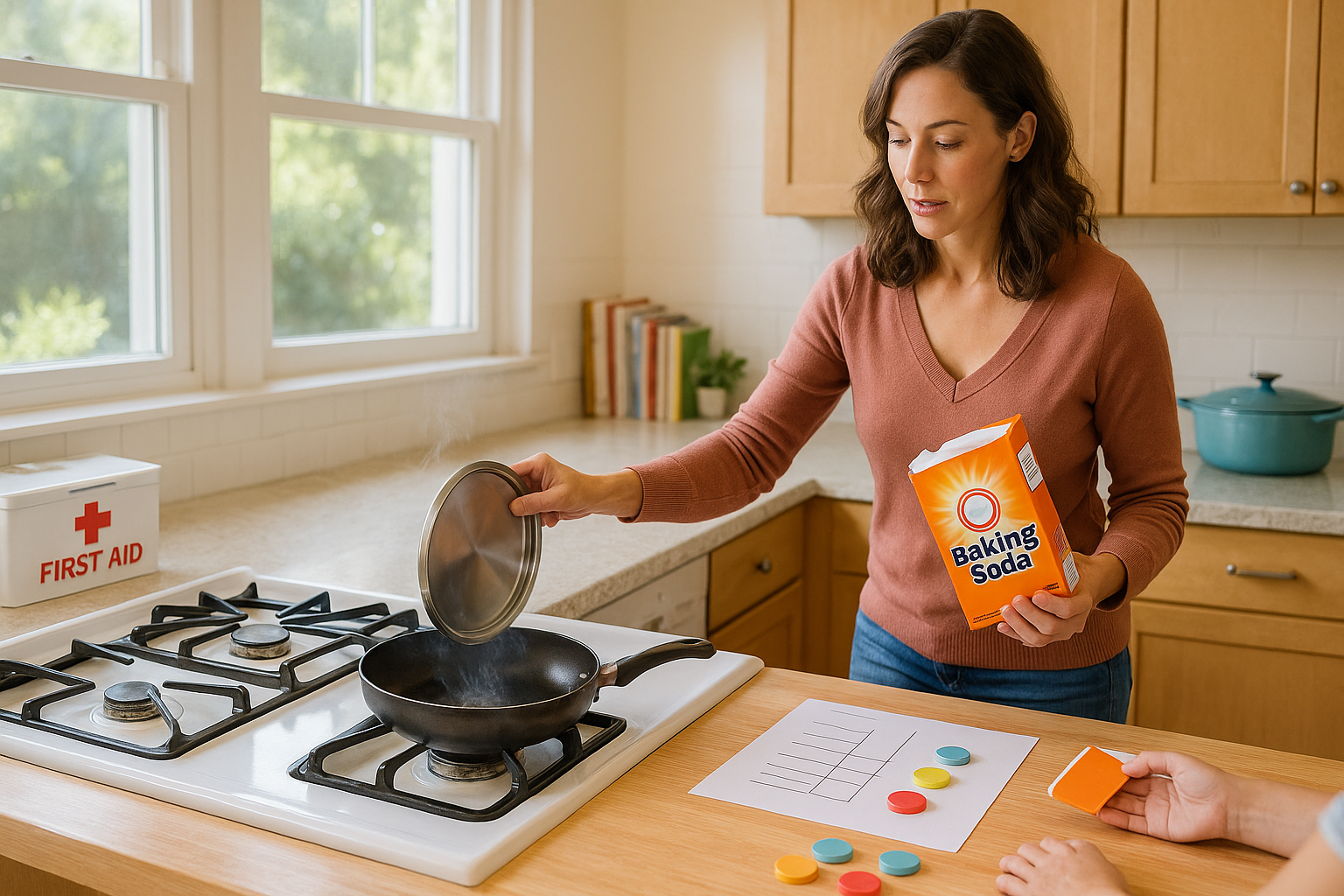
Use a metal lid that fits the pan to cover the flames completely, or pour baking soda liberally over the fire to smother it. Salt can also work in large quantities. The key to effective response is cutting off the fire’s oxygen supply, which water cannot do.
If the fire is small and contained to the pan, a proper-fitting lid is usually the most effective solution. Put the lid on and leave it there until everything has cooled completely. Don’t peek to see if the fire is out – that gives oxygen back to any remaining flames.
Step 3: Remove from Heat and Let Cool Completely
Once you’ve smothered the flames using proper grease fire safety techniques, carefully move the pan off the heat source if it’s safe to do so. Use oven mitts and be extremely careful because the pan and oil will be dangerously hot even after the flames are out.
Let everything cool completely before removing the lid or attempting to assess damage. This is crucial for grease fire safety because oil can reignite easily if it’s still hot and gets exposed to oxygen again. What looks like a successfully extinguished fire can flare back up if you’re not careful.
Don’t run water over the pan or try to clean up immediately. Proper grease fire safety protocol requires patience during the cooling period to prevent re-ignition.
Step 4: Evacuate and Call 911 if Fire Spreads
If your grease fire safety efforts don’t quickly contain the fire, or if flames spread beyond the cooking surface, immediately evacuate everyone from the house and call 911. Don’t try to be a hero – house fires spread incredibly fast and can become deadly within minutes.
Have an evacuation plan that everyone in your household knows, and don’t hesitate to use it. Property can be replaced, but people cannot. Professional grease fire safety sometimes means knowing when to let the fire department handle things.
Make sure your smoke detectors work and that you have fire extinguishers in accessible locations. These backup grease fire safety measures can make the difference between a minor kitchen incident and a major disaster.
Why This Grease Fire Safety System Works So Well
Look, I’m not going to pretend that knowing grease fire safety protocols will prevent all kitchen fires or turn you into a fearless cook who never has accidents (that would require superhuman awareness and possibly never using oil again). But it solved the biggest problem I faced – being completely unprepared for a predictable emergency:
Provides clear action steps that override panic. When you know the specific grease fire safety steps, you can act decisively instead of freezing up or making dangerous mistakes driven by fear.
Prevents common mistakes that make fires worse. Understanding grease fire safety means knowing that water will spread the fire and that moving a flaming pan can cause serious burns and property damage.
Gives you confidence to cook safely with oil. When you know proper grease fire safety protocols, you can use cooking methods that require oil without constant anxiety about potential disasters.
Protects your family and property. Quick, correct action during grease fire safety emergencies can prevent minor incidents from becoming major catastrophes that destroy homes and injure people.
Teaches everyone in your household what to do. When the whole family understands grease fire safety basics, anyone can respond appropriately during an emergency.
Common Grease Fire Safety Mistakes (That Could Kill You)
Using water on grease fires. This is the most dangerous grease fire safety mistake because water causes burning oil to splatter violently, spreading fire and potentially causing severe burns.
Trying to carry a flaming pan outside. Moving burning oil is extremely dangerous and can spread fire throughout your house. Proper grease fire safety means dealing with fires where they start.
Using the wrong type of fire extinguisher. Not all fire extinguishers work on grease fires. Class K extinguishers are designed for cooking fires, but many household extinguishers are not appropriate for grease fire safety emergencies.
Removing the lid too quickly to check if fire is out. Premature exposure to oxygen can cause seemingly extinguished grease fires to flare back up. Grease fire safety requires patience during the cooling process.
Not having proper equipment easily accessible. Baking soda, appropriate lids, and fire extinguishers need to be within easy reach during cooking for effective grease fire safety response.
Grease Fire Safety Prevention Strategies
The best grease fire safety approach is preventing fires from starting in the first place. Never leave oil heating unattended, keep cooking temperatures appropriate, and maintain clean cooking surfaces free of grease buildup.
Install proper ventilation and keep fire extinguishers designed for grease fire safety easily accessible in your kitchen. Make sure everyone who cooks in your house knows where safety equipment is located and how to use it.
Regularly check and maintain smoke detectors, and consider installing automatic fire suppression systems in kitchens where a lot of cooking happens. Advanced grease fire safety preparation can prevent small incidents from becoming major disasters.
Teaching Grease Fire Safety to Family Members
Everyone in your household who’s old enough to cook needs to understand basic grease fire safety protocols. Children should know to get adults immediately if they see kitchen fires, and teenagers who cook should know proper emergency response procedures.
Practice grease fire safety scenarios so everyone knows what to do without having to think during actual emergencies. Muscle memory can be lifesaving when panic sets in during real crises.
Make sure babysitters, guests, and anyone who might cook in your kitchen understands your grease fire safety equipment and procedures. Emergencies don’t only happen when homeowners are present.
The Grease Fire Safety Reality Check
Will learning grease fire safety protocols prevent all kitchen accidents and guarantee that you’ll never have cooking emergencies? Of course not – accidents can still happen despite preparation and knowledge. Will it give you the tools to respond effectively if grease fire emergencies occur? Absolutely.
The goal of grease fire safety education isn’t eliminating all risk from cooking – it’s ensuring that you can respond appropriately and effectively when accidents happen. Proper preparation and knowledge can mean the difference between minor kitchen incidents and life-changing disasters.
I still cook with oil regularly and have occasional minor cooking mishaps, but now I have confidence that I can handle grease fire safety emergencies if they occur. That peace of mind makes cooking more enjoyable and less stressful.
Advanced Grease Fire Safety Considerations
Once you understand basic grease fire safety principles, consider upgrading your kitchen safety equipment with automatic suppression systems, professional-grade fire extinguishers, and improved ventilation systems.
Some families install smart smoke detectors that can alert fire departments automatically during grease fire safety emergencies. Technology can provide additional layers of protection beyond personal knowledge and response.
Consider taking formal fire safety courses that cover more advanced grease fire safety techniques and other household emergency response protocols. Professional training can build confidence and competence beyond basic knowledge.
The grease fire safety system isn’t about becoming paranoid or afraid of cooking – it’s about being prepared and knowledgeable so you can cook confidently while protecting your family and home from predictable risks.
Because life’s too precious to risk your home and family’s safety when you could spend five minutes learning grease fire safety protocols that might save everything you care about.