Table of Contents
Standing in my kitchen at 3 PM on a Tuesday, I realized I hadn’t had five consecutive minutes to myself in approximately four days. Between work meetings, kid activities, meal preparation, and the general chaos of keeping humans alive and functional, I’d become this efficiency machine that handled everyone else’s needs while completely forgetting that I’m also a human being who occasionally requires mental space to remember who I am besides someone’s mom, wife, or employee.
The breaking point came when my six-year-old found me hiding in the pantry, eating crackers and staring at the wall, just trying to find somewhere in my own house where nobody would ask me for anything for thirty seconds. That’s when I realized I’d reached peak overwhelm and needed emergency intervention before I completely lost my mind or started living permanently behind the cereal boxes.
But here’s the thing about self-care when you’re drowning in responsibilities: you can’t exactly announce “I’m taking a mental health day” when people depend on you for basic survival services like food, clean clothes, and emotional support. The luxury of extended self-care feels impossible when you’re barely keeping up with existing obligations.
That’s when I discovered the bathroom spa routine – not because I’m particularly clever, but because desperation drove me to find the one room in my house with a functional lock where I could create five minutes of peace without abandoning my family or shirking actual responsibilities that couldn’t wait.
The Great Self-Care Time Shortage Crisis
Here’s what I learned about being an overworked housewife: the problem isn’t that you don’t deserve self-care – it’s that traditional self-care advice assumes you have hours of free time and minimal responsibilities, which is basically the opposite of real life when you’re managing a household and family.
The Impossible Self-Care Standards: Every self-care article talks about bubble baths, yoga classes, spa days, and meditation retreats like those are realistic options for people who can’t leave the house for thirty minutes without someone calling to ask where the snacks are kept or whether clean socks exist somewhere in the universe.
I’d read about elaborate self-care routines involving hour-long baths, expensive products, and dedicated self-care spaces, then look around my house where the bathroom door doesn’t even close properly and wonder if the writers of these articles had ever met an actual parent.
The Guilt Complex About Taking Time: Even when opportunities for self-care presented themselves, I’d feel guilty about “wasting time” on myself when there were dishes to wash, laundry to fold, and seventeen other household tasks competing for attention. Self-care felt selfish when everyone else had immediate needs that seemed more important than my mental health.
The All-or-Nothing Trap: I’d convinced myself that self-care had to be elaborate and time-consuming to be worthwhile, so if I couldn’t manage a full spa day or extensive self-care routine, I wouldn’t do anything at all. This meant going weeks without any mental restoration because I couldn’t find large blocks of time.
The reality was that I’d become so focused on everyone else’s wellbeing that I’d forgotten my own mental health affects my ability to take care of everything and everyone else. A completely depleted person can’t sustainably manage household and family responsibilities without eventually burning out.
What I Discovered About Micro Self-Care Psychology
The revelation came when I realized that self-care doesn’t have to be elaborate or time-consuming to be effective – it just needs to provide genuine mental and physical restoration that helps you reset from overwhelming responsibilities:
Small Escapes Provide Disproportionate Relief: Five minutes of genuine solitude and personal attention can provide significant mental restoration when you’re constantly managing other people’s needs without breaks for your own psychological wellbeing.
Ritual Creates Psychological Boundaries: Having a specific routine that signals “this time is for me” helps your brain transition from caretaking mode into personal restoration mode, even during brief self-care sessions.
Privacy Enables True Relaxation: The bathroom is often the only room in houses with small children where you can create actual privacy and solitude necessary for mental restoration and stress relief.
How Bathroom Spa Routine Changed My Mental Health
After months of feeling completely depleted and overwhelmed by constant caretaking responsibilities, I started implementing strategic five-minute bathroom spa sessions that provided genuine mental restoration without requiring extended time away from family obligations.
The transformation wasn’t dramatic, but it was real – instead of feeling constantly on the edge of overwhelm, I had these small pockets of restoration that helped me handle daily stress without accumulating exhaustion that led to complete burnout.
The Quick 4-Step Bathroom Spa Routine That Actually Works
This bathroom spa routine creates genuine mental restoration using minimal time and supplies while working within the constraints of real household and parenting responsibilities. Here’s the system that provided essential mental health maintenance:
Step 1: Create Physical Sanctuary Space
Lock the bathroom door and establish clear boundaries that this time is for restoration, not family problem-solving or multitasking responsibilities. The locked door signals to both family members and yourself that interruptions aren’t welcome during this brief restoration period.
Dim the lights or use softer lighting if possible to create environmental cues that this is restoration time rather than functional bathroom use. This bathroom spa routine works because it transforms familiar space into something that feels different and restorative.
Set a timer for 5-10 minutes so you can fully relax without worrying about time management or feeling guilty about taking too long for self-care that might seem indulgent to your overwhelmed brain.
Step 2: Engage Multiple Senses for Relaxation
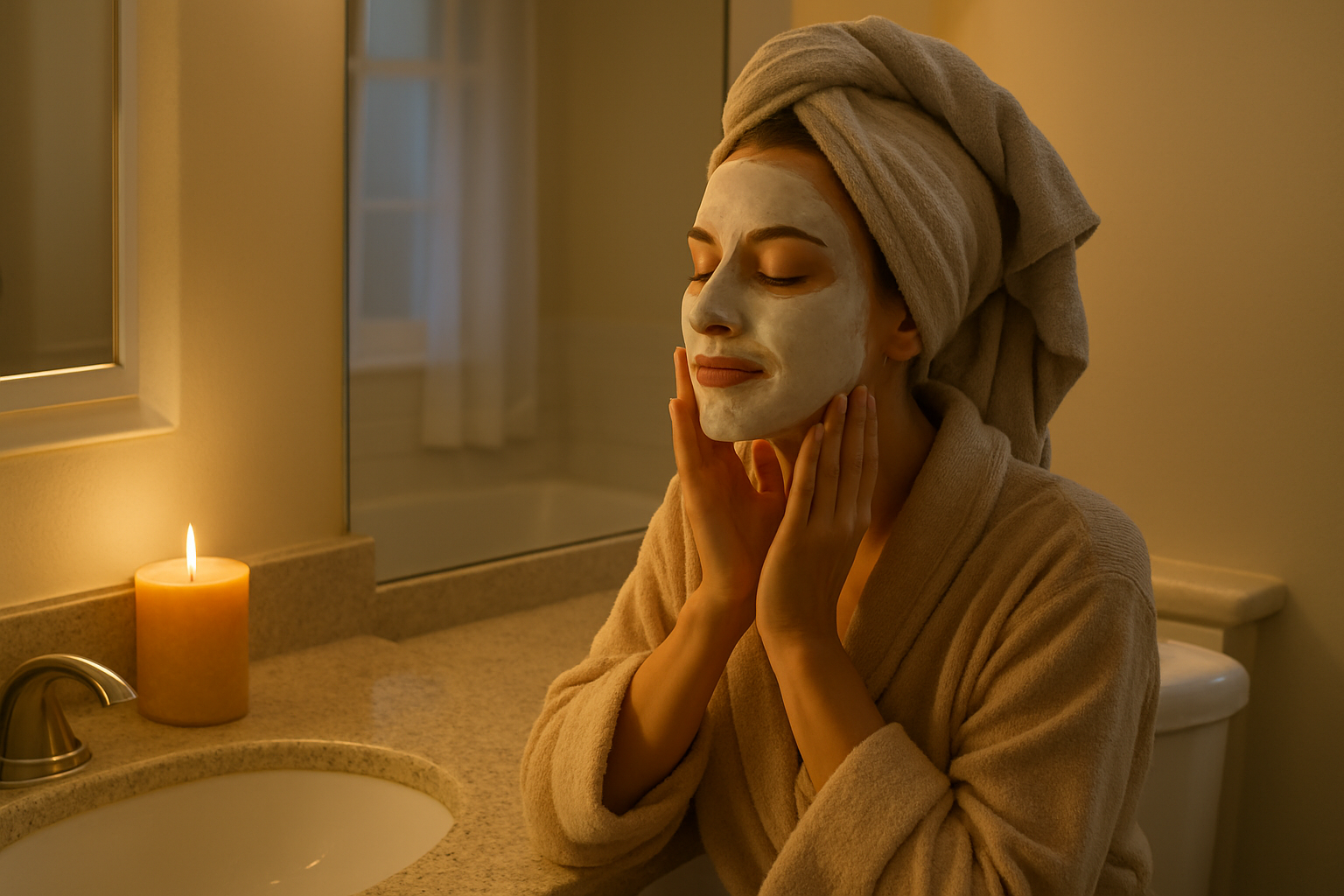
Light a candle or use essential oils to create scent cues that signal relaxation and restoration. This bathroom spa routine component helps your brain transition from stress mode into restoration mode through sensory changes that feel nurturing.
Choose scents that personally feel calming and restorative – lavender for relaxation, eucalyptus for mental clarity, or whatever scents help you feel centered and peaceful rather than overwhelmed by daily responsibilities.
The multi-sensory approach helps maximize restoration impact during brief self-care sessions by engaging your nervous system in ways that promote actual relaxation rather than just temporary distraction from stress.
Step 3: Apply Simple Self-Care Treatments
Use a face mask, apply moisturizer, or do simple self-care activities that provide physical nurturing while requiring minimal preparation or cleanup. This bathroom spa routine step addresses both physical and psychological needs for personal attention.
Choose treatments that feel nurturing rather than complicated – sheet masks, simple moisturizers, or even just washing your face mindfully can provide the physical self-care that reminds you that your own wellbeing matters.
The key is activities that feel restorative and personally nurturing rather than just functional hygiene, creating distinction between routine bathroom use and intentional self-care restoration.
Step 4: Practice Intentional Mental Reset
Use these few minutes for intentional breathing, gratitude practice, or simply sitting quietly without problem-solving or planning. This bathroom spa routine component provides the mental restoration that’s often missing from busy caretaking schedules.
Don’t use this time for mental planning, worry, or thinking about everything you need to do after the bathroom spa session ends. The goal is genuine mental rest that helps reset your stress levels rather than just brief distraction.
Allow yourself to simply exist without responsibilities or obligations for these few minutes, remembering that taking care of your mental health enables better caretaking of everyone else who depends on you.
The Before and After of Mental Health Maintenance
Before Bathroom Spa Routine – The Constant Overwhelm: Daily experience: Constant caretaking without breaks for personal restoration Stress levels: Accumulating overwhelm leading to irritability and exhaustion Self-care: Guilt about taking time, waiting for “perfect” opportunities that never come Mental state: Depleted, resentful, feeling invisible as individual person Family impact: Stressed parent creates stressed household atmosphere
After Bathroom Spa Routine – The Restored Capacity: Daily experience: Brief but genuine restoration breaks prevent complete depletion Stress levels: Manageable daily stress without accumulating overwhelming exhaustion Self-care: Regular, guilt-free micro-sessions that fit realistic schedule constraints Mental state: More centered, patient, and capable of handling responsibilities Family impact: Calmer parent creates more peaceful household environment
Why This Bathroom Spa Routine Works So Well
The micro-restoration approach addresses specific problems that make traditional self-care impossible for overwhelmed caregivers:
Works Within Real Time Constraints: Five-minute sessions fit into actual schedules without requiring childcare arrangements, extensive planning, or abandoning necessary responsibilities for extended periods.
Provides Genuine Privacy and Solitude: The bathroom lock creates actual boundaries that protect restoration time from interruptions, requests, and the constant availability that depletes caregivers.
Requires Minimal Resources: Basic supplies like candles and simple face masks create restoration experiences without expensive spa treatments or elaborate self-care investments that feel unrealistic.
Creates Sustainable Mental Health Maintenance: Regular brief restoration prevents complete burnout better than waiting for rare opportunities for extensive self-care that may never materialize.
Reduces Guilt About Self-Care: Short sessions feel manageable and reasonable rather than indulgent, making it easier to prioritize personal wellbeing without feeling selfish about taking time.
Common Bathroom Spa Routine Mistakes That Reduce Effectiveness
Using Time for Problem-Solving: Spending restoration time mentally planning, worrying, or organizing responsibilities defeats the purpose of mental restoration and relaxation.
Allowing Interruptions: Not establishing clear boundaries about bathroom spa time means family members will interrupt for non-emergencies, preventing genuine mental restoration from occurring.
Choosing Complicated Treatments: Self-care activities that require extensive setup or cleanup create additional stress rather than providing restoration from overwhelming responsibilities.
Feeling Guilty About Taking Time: Apologizing to family members or feeling guilty about brief self-care sessions undermines the psychological benefits of taking time for mental health maintenance.
Building Your Bathroom Spa Routine Strategy
Start with basic bathroom spa routine elements – locked door, candle, simple face mask – and add components gradually based on what feels most restorative and sustainable within your actual schedule constraints.
Choose consistent timing that works with your household rhythms, whether that’s early morning before everyone wakes up, evening after bedtime routines, or afternoon when you need mental reset most.
Keep bathroom spa routine supplies simple and easily accessible so you can implement restoration sessions without extensive preparation that might discourage regular use when you’re already overwhelmed.
The Bathroom Spa Routine Reality Check
Will five-minute bathroom sessions solve all overwhelm and turn you into a perfectly balanced person who never feels stressed? Of course not – managing household and family responsibilities will always involve stress and occasional overwhelm. Will it provide essential mental restoration that helps prevent complete burnout? Absolutely.
The goal of bathroom spa routine isn’t achieving perfect self-care or eliminating all stress from caretaking responsibilities. The goal is creating sustainable mental health maintenance that fits within realistic constraints while providing genuine restoration.
I still have overwhelming days and occasionally skip self-care when life gets particularly chaotic, but having accessible restoration options prevents the complete depletion that used to make everything feel impossible to handle.
The bathroom spa routine isn’t about becoming selfish or neglecting family responsibilities. It’s about recognizing that taking care of your own mental health enables better care for everyone else who depends on you, and that even brief restoration can make significant differences in your ability to handle daily challenges.
Because life’s too overwhelming to keep running on empty when you could take five minutes in your bathroom sanctuary to remember that you’re a human being who deserves care too, not just someone who provides it to everyone else.