
Table of Contents
Last Friday afternoon, I’m pulling up to the school pickup line when I reach for my sunglasses and instead grab a mysterious sticky wrapper that’s been living in my cup holder for who knows how long. As I’m trying to dispose of this evidence of my mobile eating habits, I realize there’s literally nowhere appropriate to put trash in my car except… back in the cup holder where it came from.
This moment of automotive shame was witnessed by approximately thirty other parents, all sitting in their probably-not-garbage-filled vehicles while I’m visibly wrestling with snack wrapper management like someone who’s never heard of proper waste disposal systems.
Looking around my car with fresh eyes, I took inventory of the rolling disaster zone I’d been driving around in for months. Empty coffee cups in door pockets, receipt confetti scattered across surfaces, that banana peel from last week’s rushed breakfast that I kept meaning to throw away but somehow never did.
My car had become a mobile trash can because I’d never implemented any actual car trash organization system. Every food wrapper, receipt, tissue, or random piece of garbage just got shoved somewhere “temporarily” until my vehicle resembled a very expensive dumpster with seat belts.
That weekend, I spent ten minutes and five dollars creating a car trash organization system so simple and effective that maintaining a clean car finally became easier than living in automotive chaos.
The Mobile Garbage Problem
Here’s what nobody warns you about car ownership: without intentional car trash organization, your vehicle becomes a collection point for every piece of garbage you generate during daily life, creating a mobile landfill that’s embarrassing, unsanitary, and impossible to maintain.
The cup holder dumping ground approach doesn’t work because cup holders are needed for actual cups, and random trash mixed with functional car items creates chaos that makes finding anything difficult while driving, when you need quick access to important items.
Meanwhile, stuffing trash in door pockets, glove compartments, or seat areas creates hidden garbage accumulation that eventually overwhelms your car’s functional space and creates odors, stickiness, and visual disaster that affects your driving environment and passenger comfort.
The worst part is how car trash problems compound during busy periods when you’re eating in the car, transporting kids with snacks, or dealing with increased daily errands that generate more waste during times when you have less energy for car maintenance and organization.
The Simple Car Trash Organization Discovery
My pickup line epiphany led to the realization that cars need designated trash systems just like houses, but most people try to make cars function without any waste management planning, leading to inevitable garbage accumulation and automotive chaos.
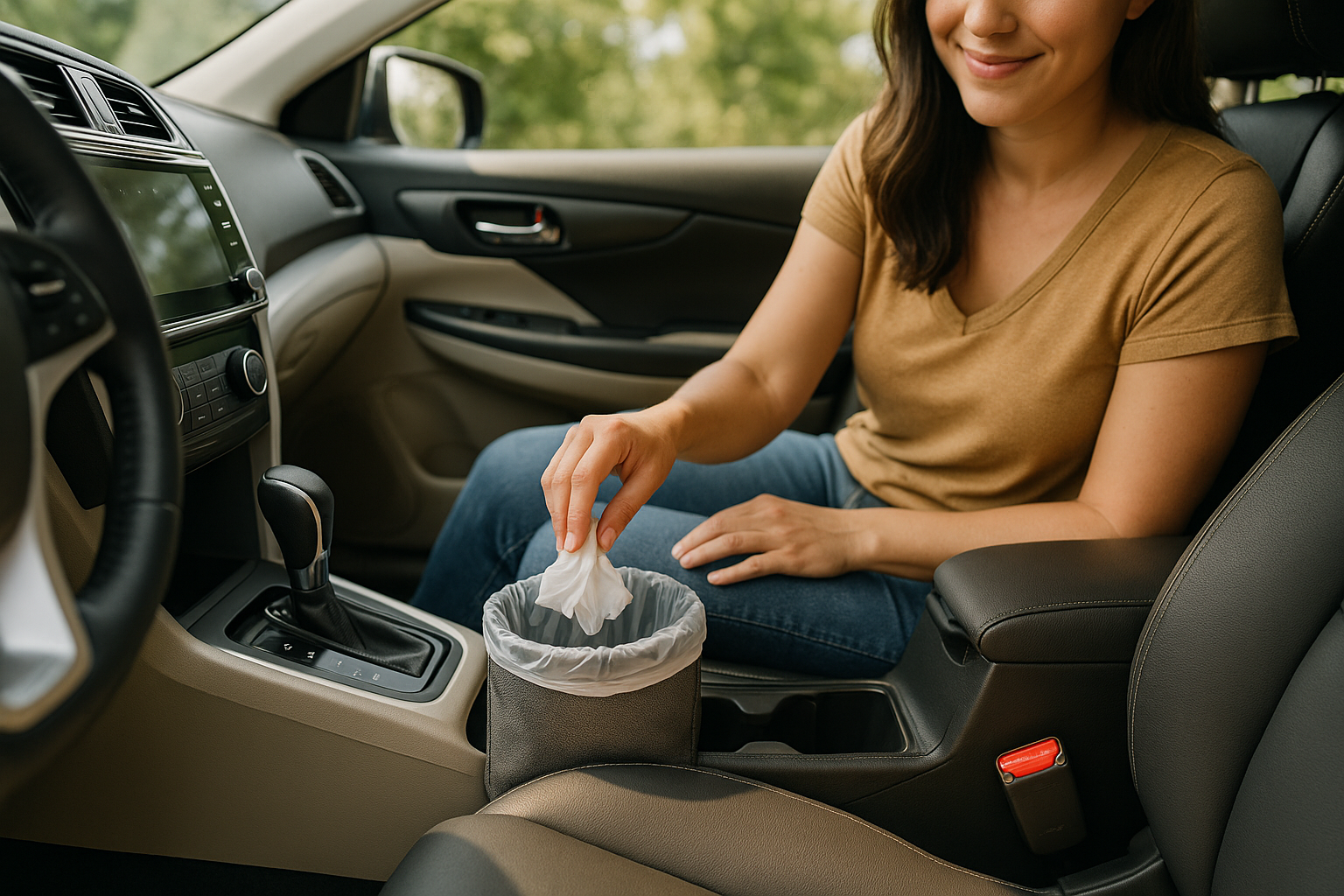
The solution was embarrassingly simple: a small container lined with disposable bags that creates obvious, accessible car trash organization without requiring expensive car accessories or complex installation procedures that might not work with different vehicle types.
This car trash organization approach works because it provides immediate, designated space for waste while being easy to empty and maintain, preventing garbage accumulation while working with normal car usage patterns rather than requiring perfect habits from busy people.
Setting Up Your Car Trash Organization System
Step 1: Choose Your Container Strategy
Find a small container that fits your car’s available space without interfering with driving safety or passenger comfort – empty cereal containers, small plastic bins, or repurposed household containers work perfectly for car trash organization without requiring special automotive purchases.
Consider your car’s layout and usage patterns when selecting container size and placement for your car trash organization system. Cup holders might work for minimal trash, while floor areas or door pockets might accommodate larger containers for families with higher waste generation.
Evaluate container stability during normal driving conditions rather than choosing containers that slide around or tip over during turns, stops, or normal vehicle movement that could undermine your car trash organization system effectiveness.
Step 2: Implement Bag Lining Systems
Line your chosen container with small trash bags, grocery bags, or even large ziplock bags to create easy disposal systems that prevent container contamination and eliminate cleaning requirements for your car trash organization maintenance.
Choose bag types based on your typical car trash generation – small bags for minimal waste, larger bags for family vehicles, or specialty bags for specific types of car trash that might require odor control or leak protection in your organization system.
Stock extra bags in your car so you can immediately replace full bags rather than driving around with overflowing car trash organization systems that defeat the purpose of having designated waste containers available.
Step 3: Create Usage and Maintenance Habits
Position your car trash organization container where it’s easily accessible from driver and passenger seats but doesn’t interfere with safety equipment, gear shifts, or normal driving operations that require clear space and immediate access.
Establish simple emptying routines that prevent overflow rather than waiting for complete capacity – empty bags when you get gas, during weekly car cleaning, or when bags reach half-full to maintain effective car trash organization systems.
Train family members on the car trash organization system so everyone uses designated containers rather than returning to random trash placement habits that recreate the original problem despite having proper waste management available.
Essential Supplies for Car Trash Success
Container Selection and Adaptation
Basic household containers work perfectly for car trash organization without requiring expensive automotive accessories – empty coffee cans, small plastic storage boxes, or repurposed food containers provide effective waste management at minimal cost.
Choose containers with adequate depth to prevent trash from falling out during normal driving but not so deep that accessing the bottom becomes difficult when containers are partially full in your car trash organization system.
Consider multiple small containers for larger vehicles rather than single large containers that might be difficult to access from all seating positions or that create concentrated waste areas that become overwhelming to maintain.
Bag and Liner Options
Small trash bags designed for bathrooms or offices work well for car trash organization systems, providing adequate capacity without taking up excessive space or creating disposal challenges when bags become full.
Grocery store plastic bags can serve as free liners for car trash organization, though they may require more frequent changing due to smaller capacity and less durability compared to purpose-made trash bags.
Scented bags or odor-control options might benefit car trash organization systems that handle food waste or are emptied less frequently, preventing unpleasant smells that can affect vehicle comfort during longer periods between maintenance.
Why Car Trash Organization Actually Works
Unlike random trash placement that creates overwhelming cleanup projects, designated waste systems provide immediate disposal options that prevent garbage accumulation while making car maintenance manageable through regular small actions rather than periodic major cleanouts.
The approach prevents the embarrassment and health issues associated with mobile garbage accumulation by creating systems that work with normal usage patterns rather than requiring perfect habits or constant attention to maintain vehicle cleanliness.
Most importantly, car trash organization systems make cars more pleasant and functional for everyone by eliminating the visual and physical chaos created by random waste placement that interferes with vehicle comfort and usability.
Long-Term Benefits Beyond Clean Cars
Car trash organization reduces stress associated with vehicle maintenance by preventing large-scale cleanup projects that feel overwhelming and time-consuming compared to simple bag replacement that maintains cleanliness through small, manageable actions.
Your vehicle becomes more pleasant for passengers and maintains better resale value when protected from garbage damage, sticky residue, and odors that can permanently affect car interiors when waste management is neglected over time.
The approach builds confidence in your ability to maintain organized systems in challenging environments, demonstrating that simple solutions can solve problems that initially seem overwhelming or require expensive interventions.
Seasonal and Usage Adaptations
Summer car trash organization might require more frequent emptying or odor-control measures due to heat effects on organic waste, while winter systems might need protection from moisture or temperature effects on container materials.
Road trip adaptations can include larger containers or multiple waste systems to handle increased trash generation during extended car time, ensuring car trash organization systems remain effective during high-usage periods.
Family vehicle car trash organization might require larger capacity or multiple containers to handle waste from multiple passengers, while single-person vehicles might function effectively with minimal container systems.
Advanced Organization Strategies
Create specialized car trash organization for different waste types – wet trash containers for food waste, dry containers for paper and packaging, or recycling containers for items you plan to process at home rather than disposal.
Combine car trash organization with other vehicle organization systems like storage containers, cleaning supplies, or emergency kits that create comprehensive vehicle management rather than addressing only waste disposal needs.
Develop car trash organization systems that coordinate with home waste management – using compatible bag types, disposal schedules, or sorting systems that integrate vehicle and household trash processing efficiently.
Troubleshooting Common Issues
If containers slide around during driving, add non-slip pads, position them in more stable locations, or choose containers with wider bases that resist movement during normal vehicle operation in your car trash organization system.
When family members forget to use car trash organization systems, evaluate container placement and accessibility rather than assuming the problem is purely behavioral, and adjust systems to make correct usage easier than incorrect habits.
For containers that develop odors despite regular emptying, consider more frequent bag changes, different container materials, or cleaning routines that prevent bacterial growth or residue accumulation in car trash organization systems.
Maintenance and Long-Term Success
Replace containers periodically when they show wear, damage, or persistent odors that cleaning can’t eliminate, since effective car trash organization depends on containers that remain functional and sanitary over extended use.
Evaluate and adjust your car trash organization system as vehicle usage patterns change – new jobs with different commutes, family changes, or seasonal activity variations that affect waste generation and container requirements.
Stock replacement bags and supplies before you run out to prevent gaps in car trash organization coverage that can lead to return of random waste placement habits during periods without proper disposal options.
Creating Family-Wide Systems
Teach all family members about car trash organization expectations and procedures so the system works regardless of who’s driving or generating waste, creating consistent vehicle maintenance habits across all users.
Consider individual car trash organization needs for family members who use vehicles independently, ensuring everyone has access to appropriate waste management regardless of their specific car usage patterns.
Model proper car trash organization consistently so family members learn that vehicle cleanliness is a shared responsibility rather than assuming one person will handle all automotive maintenance and organization tasks.
This car trash organization approach costs under ten dollars to implement comprehensively, prevents vehicle garbage disasters, and maintains car cleanliness through simple systems that work with normal usage patterns rather than requiring perfect habits.
Give this container system one month to transform your vehicle maintenance routine, and you’ll never again feel embarrassed by mobile garbage accumulation when simple planning can keep your car clean and functional.
Because life’s too short to spend it embarrassed by the rolling landfill your car has become or overwhelmed by massive vehicle cleanout projects that could be prevented, when strategic car trash organization using simple containers and bags creates the ongoing cleanliness that makes your vehicle a pleasant space instead of a mobile waste management crisis that stresses you out every time you need to transport passengers or maintain basic automotive dignity.