
Table of Contents
Last Tuesday morning, I walked out to water my wilted tomato plants and discovered our garden hose had apparently transformed overnight into some kind of modern art installation. It was twisted, kinked, and tangled around itself in ways that seemed to defy several laws of physics, sprawled across the patio like a giant green snake having an existential crisis.
Twenty minutes later, I was still wrestling with this rubber nightmare, trying to undo knots that looked like they’d been tied by a particularly vindictive sailor. Meanwhile, my plants were literally dying of thirst three feet away, and I was questioning every life choice that led to me having a full-blown argument with a garden hose at 7 AM.
The final straw came when I finally got it untangled, only to have it kink immediately when I tried to drag it to the far corner of the garden. No water pressure, just the mocking sound of air trying to push through a completely blocked hose while I stood there holding a useless green rope.
That’s when I realized our complete lack of any garden hose storage system wasn’t just annoying – it was actively sabotaging my attempts to keep anything alive in our yard. Every watering session started with a ten-minute wrestling match, and half the time the hose was so kinked it barely worked anyway.
The Great Garden Hose Wrestling Championship
Here’s what nobody tells you about owning garden hoses: without proper storage, they develop a supernatural ability to tangle themselves into impossible configurations. You can lay them out perfectly straight after use, and somehow overnight they transform into abstract sculptures that require engineering degrees to decode.
The traditional solutions all have major problems. Those fancy hose reels that mount to your house wall cost a fortune and take up permanent space that you might need for other things. The wheeled carts look great in stores but take up significant storage space in garages or sheds, and half of them fall apart after one season of actual use.
Hanging hoses on hooks creates kinks at the hanging points, which eventually become permanent weak spots that split and leak. Plus, getting a long hose properly arranged on wall hooks usually requires two people and a lot of patience, especially when you’re tired and just want to finish yard work.
The worst approach is just leaving hoses wherever they land after use, which inevitably leads to the tangled disaster scenarios that make simple watering feel like preparing for battle. You spend more time managing the hose than actually watering plants.
The Simple Garden Hose Storage Solution That Changed Everything
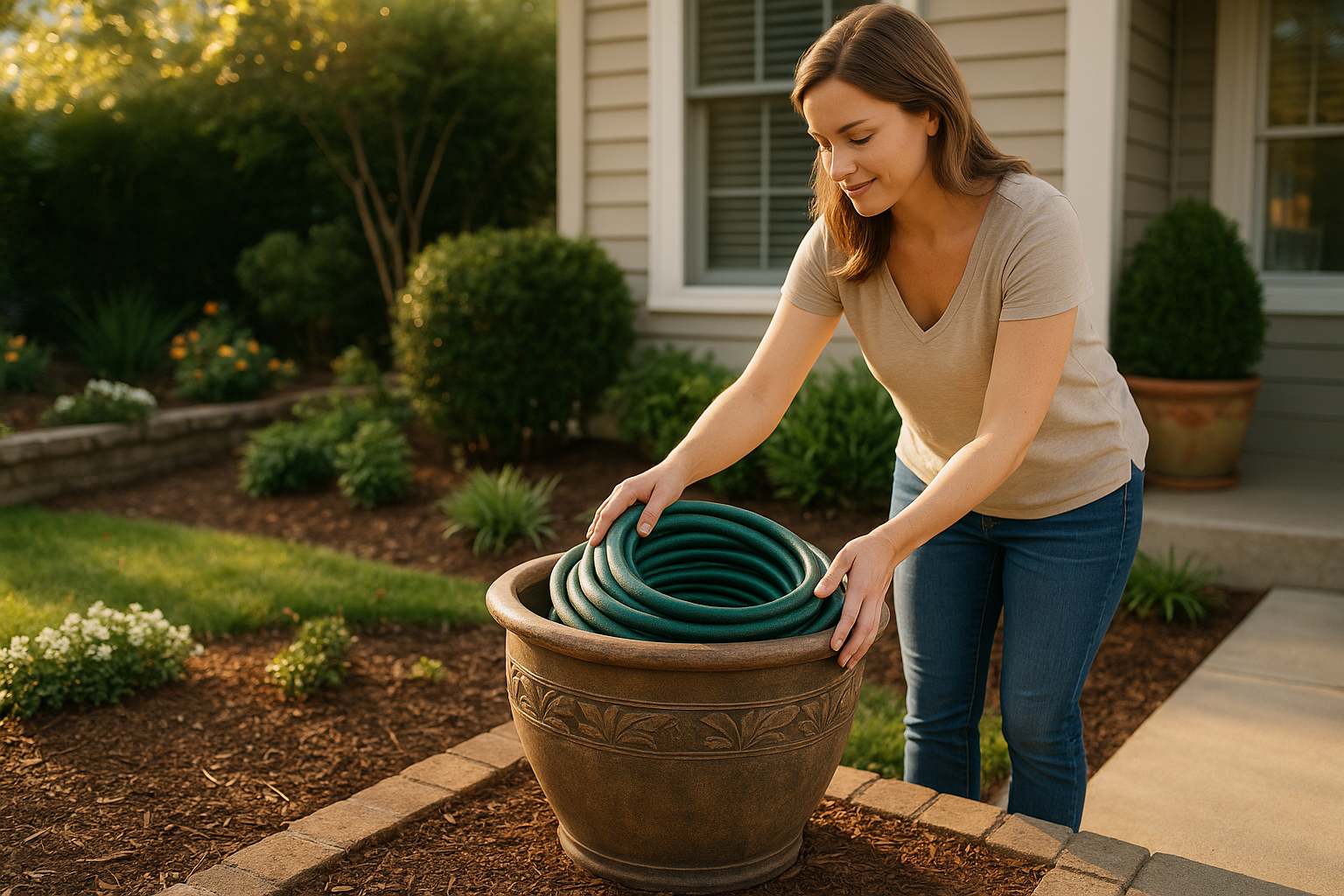
The game-changing garden hose storage discovery came from pure desperation and a large decorative planter that wasn’t being used for anything productive. Instead of buying expensive hose storage equipment, I realized I could create a simple, effective garden hose storage system using containers I already had around the house.
This approach works because it keeps hoses in gentle, natural coils without sharp bends or pressure points that create kinks. The circular shape encourages proper coiling, and the container walls provide structure that prevents tangling while keeping everything contained and neat.
Setting Up Your Garden Hose Storage System
Step 1: Choose Your Storage Container
Look for a large planter, decorative bucket, or even a clean trash can – anything round and at least 18 inches across works perfectly for most standard garden hoses. I use a large ceramic planter that was too heavy to move around for actual planting but works brilliantly for hose storage.
The basic plastic planters from garden centers cost around $15-20 for large sizes and work just as well as expensive ones. Look for containers with straight sides rather than ones that taper dramatically, as this makes coiling easier and more stable for your garden hose storage system.
If you have multiple hoses or extra-long ones, grab a larger container – those big decorative planters that are 24+ inches across handle even 100-foot hoses with room to spare. Check thrift stores and garage sales for large containers that work perfectly for garden hose storage at fraction of retail prices.
Step 2: Position Your Hose Storage Station
Place your container somewhere central to your watering areas but out of high-traffic walkways. I keep mine near our outdoor spigot so the hose can stay connected most of the time, making this garden hose storage system super convenient for quick watering sessions.
Consider drainage if you’re using a container that doesn’t have holes. Hoses can drip a bit after use, so either drill a few small holes in the bottom or place the container on a surface where a little water won’t matter.
For aesthetic purposes, choose a container that complements your outdoor space. This garden hose storage system can actually improve your yard’s appearance instead of creating an eyesore like some commercial hose storage solutions do.
Step 3: Master the Proper Coiling Technique
Start coiling from the spigot end, making large, loose loops that follow the natural curve of your container. Don’t force tight coils – gentle, generous loops prevent kinks and make unrolling much easier for your garden hose storage system.
Keep the loops roughly the same size as you coil, stacking them neatly in the container. The key is maintaining consistent, gentle curves that don’t stress the hose material or create pressure points that lead to permanent kinks.
Leave the spray nozzle end on top for easy access. This makes it simple to grab and start unrolling without having to dig around in the coiled hose to find the business end of your garden hose storage system.
Essential Supplies for Your Hose Storage Success
Container Selection Made Simple
Basic large planters work perfectly – you don’t need anything fancy or expensive for effective garden hose storage. The plastic ones from home improvement stores in the $12-18 range handle most residential hose lengths easily. Look for the basic round ones without decorative ridges or complex shapes that might interfere with smooth coiling.
For a more decorative approach, those large ceramic or concrete planters work beautifully and add visual appeal to your garden hose storage system. Check garden center clearance sections in fall – you can often find attractive large containers for half price when they’re clearing seasonal inventory.
Old wooden barrels or large ceramic pots from garage sales make excellent hose storage containers. I’ve seen great setups using repurposed items that cost under $10 and look much more expensive than commercial hose storage solutions.
Protecting Your Investment
If your container doesn’t have drainage holes and you’re concerned about water accumulation, grab a basic drill bit set for around $5. A few small holes in the bottom prevent standing water that could damage your garden hose storage system or create mosquito breeding areas.
For hoses that get heavy use, consider adding a hose nozzle with shut-off capability – around $8-12 for decent ones. This prevents dripping in your storage container and gives you better water control during use, making your garden hose storage system more efficient overall.
A basic hose washer replacement kit costs about $3 and prevents leaks at connection points. These tiny rubber washers wear out and cause drips that can make your garden hose storage area messy over time.
Why This Garden Hose Storage Method Actually Works
Unlike rigid storage systems that force hoses into unnatural shapes, this method works with the hose’s natural flexibility. Gentle coiling in a circular container prevents the stress points and sharp bends that create permanent kinks and reduce hose lifespan.
The container approach is completely flexible – you can adjust coiling patterns for different hose lengths, store multiple shorter hoses in one container, or easily move your entire garden hose storage system if you rearrange your outdoor space.
Most importantly, this system makes using your hose easier rather than more complicated. No cranking mechanisms, no complex mounting hardware, just grab and unroll when you need water, coil and drop when you’re done.
Long-Term Benefits Beyond Organization
Proper garden hose storage significantly extends hose lifespan by preventing kinks, twists, and UV damage from leaving hoses sprawled on hot pavement. A good hose can last years longer with proper storage compared to the typical “drop it wherever” approach.
Your outdoor space looks intentionally organized instead of chaotic. Guests notice when yards look thoughtfully maintained, and a neat hose storage system contributes to that overall impression of a well-managed home.
The time savings add up significantly over a growing season. Instead of starting every watering session with hose wrestling, you can get straight to actual plant care. More time gardening, less time fighting equipment.
Troubleshooting Your Hose Storage System
If your hose keeps kinking despite proper storage, check for permanent damage from previous poor storage. Old kinks sometimes become permanent weak spots that require hose replacement for your garden hose storage system to work effectively.
For very long hoses that seem too unwieldy for container storage, consider whether you actually need that much length. Sometimes splitting one very long hose into two shorter ones with a quick-connect coupling works better for both storage and use.
In areas with freezing winters, drain your hose completely before coiling for storage. Any remaining water can freeze and damage the hose, undermining all the benefits of proper garden hose storage.
Seasonal Adjustments and Maintenance
During peak growing season, your garden hose storage system gets daily use. Check periodically that the container remains stable and positioned conveniently for your most common watering routes.
In fall, give your hose a thorough cleaning before winter storage. Disconnect it from spigots in freezing climates and store the container in a garage or shed if possible to extend hose life.
Spring is a great time to inspect your hose for winter damage and replace washers or fittings that might have deteriorated. A well-maintained garden hose storage system protects your equipment investment year after year.
This garden hose storage approach costs under twenty dollars to set up, takes less than ten minutes to implement, and eliminates the daily frustration of tangled, kinked hoses that make yard work feel like punishment. More importantly, it works with normal human behavior instead of requiring perfect technique or constant vigilance.
Give this system one week to prove itself, and you’ll wonder why you spent years wrestling with hose disasters when such a simple solution was hiding in plain sight. Your watering routine will become actually pleasant instead of starting with a ten-minute equipment battle every single time.
Because life’s too short to spend your precious gardening time untangling rubber knots that seem to multiply overnight while your plants wither three feet away, when a simple container can turn hose storage from a daily wrestling match into a two-second task that actually makes yard work enjoyable.