
Table of Contents
Memorial Day weekend last year, I’m prepping for our first backyard barbecue of the season when I lift the lid on our grill and nearly lose my appetite. The grates look like they’ve been marinating in their own grease since the Clinton administration. Chunks of mystery meat welded to the surface, a layer of carbonized gunk that looks like it could be scraped off and sold as roofing material.
My husband cheerfully suggests we just “fire it up and burn off the worst of it,” which is exactly the kind of logic that explains why I handle most household maintenance decisions. You don’t solve months of neglected grill cleaning by hoping fire will magically restore sanitary conditions.
I grabbed the heavy-duty grill cleaner from our garage – the industrial-strength stuff that requires gloves and threatens to dissolve your lungs if you breathe wrong. Twenty minutes later, I’m coughing from chemical fumes, my hands are burning despite the gloves, and the grill still looks like a crime scene.
That’s when my neighbor wandered over, took one look at my chemical warfare situation, and casually mentioned that his grandmother always used onions to clean grills. Onions. Like, the vegetable you put on burgers, not some specialized cleaning product.
Standing there in a cloud of toxic fumes with a grill that still looked disgusting, I figured I had nothing left to lose by trying his grandmother’s natural grill cleaning method.
The Grill Cleaning Chemical Warfare Problem
Here’s what nobody tells you about maintaining outdoor grills: the commercial cleaning products designed for this job are basically weapons-grade chemicals that make your entire yard smell like a hazmat situation. You need protective gear, ventilation, and a hazmat disposal plan for the leftover cleaner.
Meanwhile, these expensive chemical solutions often don’t work as well as advertised. You’re spending fifteen dollars on a bottle of industrial-strength degreaser, risking chemical burns, and still ending up with a grill that looks like it’s been through a grease fire.
The worst part is using these harsh chemicals on something you’re going to cook food on. Even after thorough rinsing, there’s always that nagging worry about chemical residue contaminating your next meal. You’re literally paying to potentially poison your family’s barbecue.
Plus, the environmental impact is terrible. You’re dumping harsh chemicals into your yard, poisoning groundwater, and contributing to air pollution every time you try to maintain basic grill hygiene for your natural grill cleaning needs.
The Onion Natural Grill Cleaning Discovery
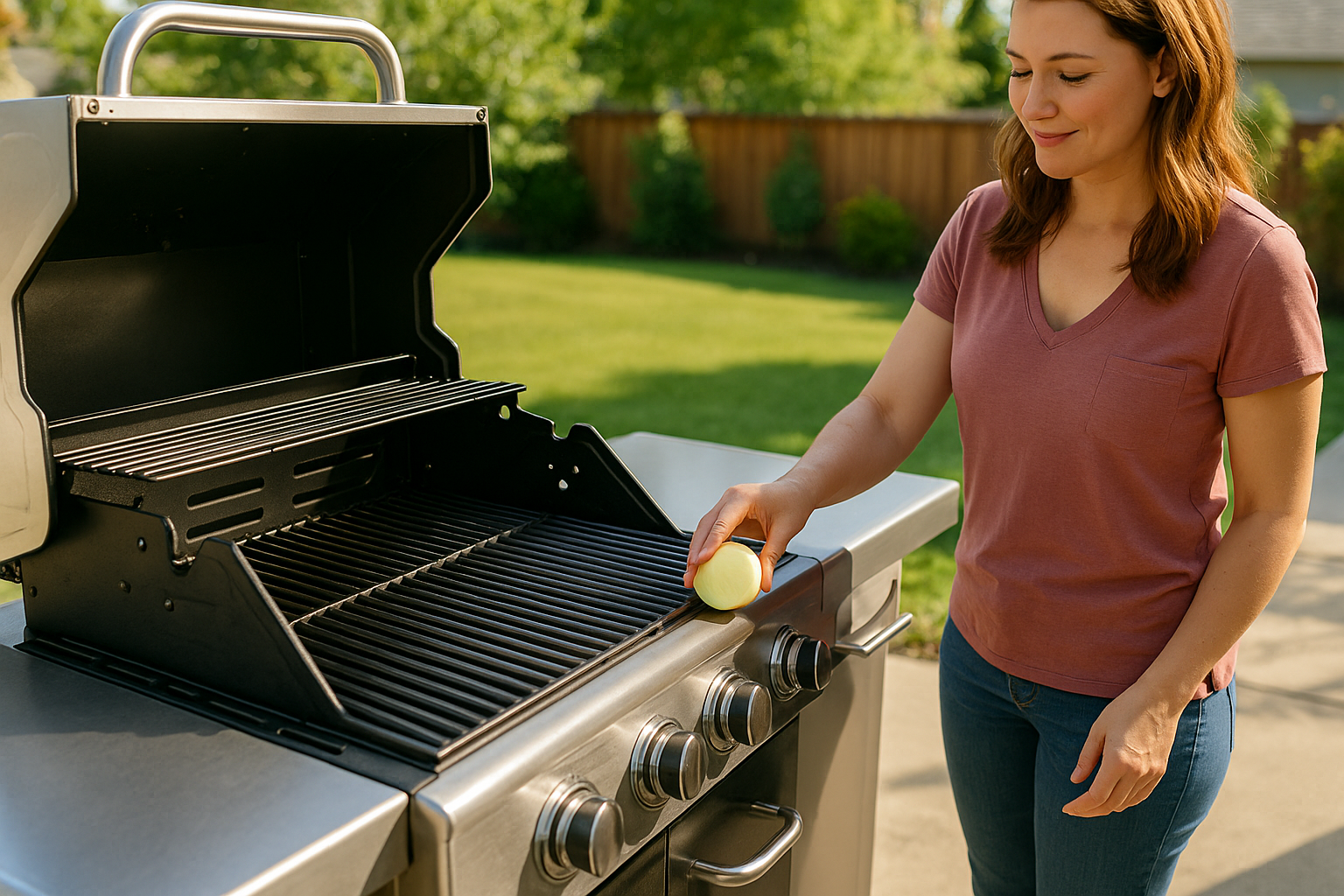
My neighbor’s grandmother’s natural grill cleaning trick sounded completely ridiculous, but desperate times called for desperate measures. I cut a regular yellow onion in half, stabbed it with a long fork to create a handle, and started scrubbing the hot grill grates while feeling absolutely foolish.
The results were honestly shocking. The onion’s natural acids and oils cut through the grease buildup like it was nothing. Within five minutes, grates that had looked hopeless were actually clean – not just superficially clean, but genuinely ready for cooking.
This natural grill cleaning method works because onions contain natural enzymes and acids that break down grease and protein residues. The heat from the grill activates these compounds, creating a powerful but completely non-toxic cleaning system that costs about fifty cents per use.
Setting Up Your Natural Grill Cleaning System
Step 1: Prepare Your Natural Cleaning Tool
Cut a medium yellow onion in half – white onions work too, but yellow ones seem to have the right balance of cleaning acids for effective natural grill cleaning. Save one half for cooking and use the other half for cleaning, or use both halves if your grill is particularly disgusting.
Stab the onion half with a long-handled fork or grilling tool to create a safe handle. This lets you scrub the grill without getting your hands too close to the hot surfaces during your natural grill cleaning session.
Regular grocery store onions work perfectly – you don’t need anything fancy or expensive for this natural grill cleaning method. I usually grab an extra onion when I’m shopping specifically to have one available for grill maintenance.
Step 2: Heat and Clean Technique
Fire up your grill to medium-high heat and let it get properly hot before starting your natural grill cleaning process. The heat is crucial for activating the onion’s cleaning properties and making the method work effectively.
Once the grill is hot, use your fork-handled onion half to scrub the grates thoroughly. The onion will sizzle and release its juices, which do the actual cleaning work. Don’t press too hard – let the onion’s natural acids do the heavy lifting.
Work systematically across all the grate surfaces, paying extra attention to areas with stubborn buildup. The natural grill cleaning process should take about 5-10 minutes depending on how dirty your grill was when you started.
Step 3: Final Seasoning and Prep
After scrubbing with the onion, the natural grill cleaning process leaves your grates perfectly seasoned and ready for cooking. The onion oils create a natural non-stick surface that actually improves your grilling results.
Let the grill heat for another few minutes to burn off any remaining onion residue, then it’s ready for food. No rinsing required, no chemical residue concerns, no waiting for fumes to dissipate – just clean, seasoned grates ready for your next barbecue.
The whole natural grill cleaning process takes about fifteen minutes from start to finish, compared to an hour or more with chemical cleaners when you factor in safety precautions and ventilation time.
Essential Supplies for Natural Grill Cleaning Success
Basic Equipment Setup
All you need for effective natural grill cleaning is regular yellow onions from any grocery store – usually around $1-2 per pound, and one onion handles multiple cleaning sessions. This makes the ongoing cost of natural grill cleaning practically negligible compared to commercial cleaners.
A long-handled fork or grilling tool is essential for safety during natural grill cleaning. Most people already have these for regular grilling, so no additional investment required. If you need one, basic grilling forks cost around $5-8 at any home goods store.
For heavily soiled grills, you might want to have a second onion half ready as backup. Sometimes really neglected grill grates need extra natural grill cleaning power, and onions are cheap enough to use generously.
Safety and Preparation Items
Keep a pair of basic grilling gloves handy during natural grill cleaning sessions – around $8-12 for heat-resistant ones that protect your hands if you need to adjust grill settings or move items around the cooking area.
A basic grill brush can supplement your natural grill cleaning for stubborn spots that need extra mechanical action. The cheap wire brushes work fine – about $3-5 – and last much longer when you’re not relying on them for all your cleaning needs.
Paper towels or old rags are useful for wiping down surrounding surfaces after your natural grill cleaning session. The onion method is much cleaner than chemicals, but you might still want to tidy up the area when finished.
Why Natural Grill Cleaning Actually Works
Unlike harsh chemical degreasers that attack grime through brute force toxicity, onions use natural enzymes and acids that specifically target grease and protein residues. This creates effective cleaning without the health risks or environmental damage of commercial products.
The heat activation aspect makes this natural grill cleaning method more effective than cold cleaning approaches. Hot grill grates help the onion release its cleaning compounds and make them more reactive with stuck-on grime.
Most importantly, this approach leaves your grill seasoned and ready for immediate cooking. Chemical cleaners require thorough rinsing and often leave residues that affect food flavor. Natural grill cleaning with onions actually improves your cooking surface instead of contaminating it.
Long-Term Benefits Beyond Clean Grates
Regular natural grill cleaning with onions extends grill lifespan by preventing corrosive buildup that damages grates and internal components over time. Clean grills run more efficiently and maintain better temperature control for superior cooking results.
Your food tastes better when cooked on properly maintained grates. No chemical residue flavors, no old grease contamination, just clean surfaces that let your ingredients‘ natural flavors shine through in your cooking.
The cost savings add up significantly over grilling seasons. Instead of spending $10-15 per bottle on harsh chemical cleaners multiple times per season, you’re using fifty-cent onions for superior natural grill cleaning results.
Seasonal Maintenance and Best Practices
Start each grilling season with a thorough natural grill cleaning session to remove winter buildup and prepare your equipment for regular use. This sets a clean baseline that makes ongoing maintenance much easier throughout the season.
After big grilling sessions or messy foods like marinated meats, do a quick natural grill cleaning while the grill is still hot. This prevents buildup from accumulating and keeps your grill in consistently good condition.
End-of-season natural grill cleaning before winter storage prevents corrosion and makes spring startup much easier. Clean grates store better and require less intensive maintenance when grilling season returns.
Troubleshooting Your Natural Cleaning Routine
If the onion method isn’t cutting through extremely heavy buildup, try heating the grill hotter or using a fresher onion with more active enzymes. Sometimes older onions lose some of their natural grill cleaning potency.
For grates with years of neglected buildup, you might need to combine natural grill cleaning with gentle mechanical scrubbing using a basic wire brush. The onion softens the grime, making mechanical removal much easier and more effective.
If your grill has cast iron grates, the natural grill cleaning method works especially well because the onion oils help season the iron and prevent rust formation. This makes onion cleaning particularly beneficial for cast iron grilling surfaces.
Making It a Regular Routine
The key to successful natural grill cleaning is making it part of your regular grilling routine rather than a special maintenance project. Keep a few extra onions in your kitchen specifically for grill cleaning purposes.
Clean your grill with onions every few uses during active grilling season, or whenever you notice buildup starting to accumulate. Regular natural grill cleaning prevents problems from developing rather than trying to solve major cleaning disasters.
Teach family members this natural grill cleaning method so anyone can maintain the grill without requiring special equipment or safety training. It’s safe enough that even teenagers can handle grill maintenance responsibly.
This natural grill cleaning approach costs practically nothing to implement, eliminates exposure to toxic chemicals, and works better than expensive commercial cleaners while leaving your grill perfectly seasoned for superior cooking. Most importantly, it transforms grill maintenance from a hazardous chore into a simple, safe routine that anyone can manage.
Give this method one try, and you’ll never go back to chemical warfare against your grill grates. Your barbecues will taste better, your equipment will last longer, and you’ll actually look forward to grill maintenance instead of dreading the chemical ordeal of traditional cleaning methods.
Because life’s too short to spend it in clouds of toxic fumes while scrubbing grill grates with industrial chemicals that cost a fortune and barely work anyway, when a fifty-cent onion can clean your grill better than expensive degreasers while actually making your food taste better instead of potentially poisoning your family’s next barbecue.