
Table of Contents
You know that moment when you’re rushing around trying to get ready for work and you catch a glimpse of your bedroom in the mirror – unmade bed looking like a crime scene, clothes scattered across every surface, and that general aura of chaos that makes you feel like you’re failing at basic adulting before 8 AM even arrives?
I used to think bed making was this elaborate process that required hospital corners, perfectly aligned pillows, and the kind of attention to detail that belonged in magazines rather than real life where you have approximately four minutes between hitting snooze and needing to leave the house. So most days, I just… didn’t. Left my bed looking like I’d wrestled with it all night and lost.
But here’s what I discovered: walking past my bedroom throughout the day and seeing that unmade bed was like having a constant visual reminder that I couldn’t handle simple household tasks. Every glimpse of rumpled sheets felt like evidence that I was behind on everything, disorganized, and basically living in chaos even when the rest of my life was relatively together.
The real revelation came when my neighbor stopped by unexpectedly and I found myself frantically closing my bedroom door because I was embarrassed by the disaster zone that was my sleeping space. A made bed apparently makes the difference between “lived-in home” and “tornado aftermath,” and I was firmly in tornado territory.
The Unmade Bed Psychological Warfare
Here’s what I learned about unmade beds: they’re not just about messy rooms. They’re about how visual chaos in your personal space affects your entire mental state throughout the day.
The Morning Mood Killer: Starting each day by walking past an unmade bed sets this underlying tone of being behind, disorganized, and unable to handle basic tasks. Even when everything else is going well, that visual mess in your bedroom creates background stress that affects how you feel about your household management abilities.
I’d be getting ready for important meetings, feeling confident and prepared, but catching sight of my chaotic bed in the mirror would trigger this little voice saying “look at your life – you can’t even make your bed, how are you supposed to handle bigger responsibilities?”
The Productivity Drain: Coming home to an unmade bed after a long day felt demoralizing instead of welcoming. Your bedroom is supposed to be this peaceful retreat, but when it looks like a disaster zone, it adds to your stress instead of providing relief from daily pressures.
The Unexpected Guest Panic: Any time someone needed to use our bathroom or grabbed something from our bedroom, I’d have this flash of embarrassment about the unmade bed visible through the doorway. It became this source of low-level anxiety about who might see our private space looking chaotic.
After tracking my mood for a month, I realized that days when I made my bed (rare) versus days when I didn’t (most days) correlated with how organized and capable I felt throughout the entire day. An unmade bed was affecting way more than just bedroom appearance.
What I Discovered About Bed Making Psychology
The real issue with bed making isn’t that it’s difficult or time-consuming – it’s the mental barriers that make a simple task feel like this elaborate project requiring more time and energy than busy mornings allow:
Perfectionism Paralysis: I thought bed making meant achieving hotel-level perfection with tight corners, perfectly arranged decorative pillows, and magazine-worthy presentation. Since I couldn’t do it “right,” I often didn’t do it at all, which created more stress than just accepting “good enough.”
All-or-Nothing Thinking: Either the bed was made perfectly or it wasn’t worth doing at all. This mindset prevented me from discovering that even basic quick bed making creates significant visual improvement without requiring detailed attention.
Time Anxiety: Mornings already felt rushed and overwhelming, so adding another task seemed impossible even when that task would actually take less time than I spent feeling guilty about not doing it.
How Quick Bed Making Changed Everything
After months of bedroom chaos and morning guilt, I discovered the most obvious solution: bed making doesn’t have to be perfect or time-consuming to create dramatic visual improvement in bedroom appearance and personal mental state.
Sixty seconds. That’s literally all it takes to transform a chaotic bedroom into a space that looks intentional and organized, even when everything else is still scattered around. The bed is such a dominant visual element that making it well creates the illusion of overall room organization.
The psychological impact was immediate and honestly kind of magical. Walking past a made bed throughout the day felt like evidence that I had my life together, even during weeks when nothing else was going particularly well.
The Perfect 4-Step Quick Bed Making System That Actually Works
This quick bed making approach focuses on maximum visual impact with minimal time investment. Here’s the system that transformed my mornings and my mental state:
Step 1: Pull Everything Up and Smooth
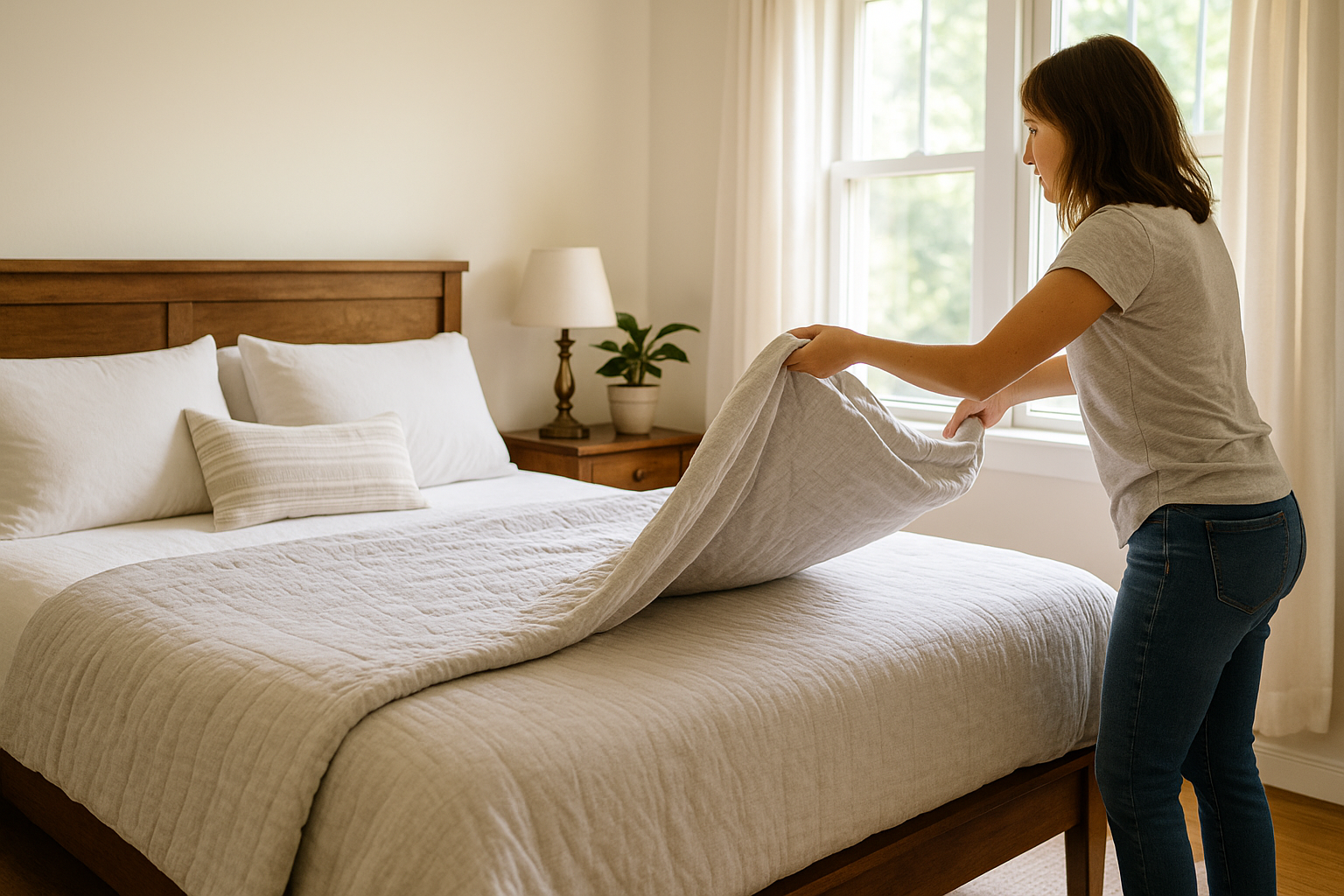
Don’t worry about perfection or hospital corners – just grab the sheets, blankets, and comforter and pull everything up toward the head of the bed. Smooth out obvious wrinkles and make sure coverage looks reasonably even across the mattress.
This quick bed making step takes about fifteen seconds and creates 80% of the visual improvement with almost no effort. Even wrinkled covers that are pulled up look infinitely better than tangled bedding scattered across the mattress.
Focus on coverage rather than perfection – the goal is making the bed look intentional, not achieving award-winning presentation that requires detailed attention you don’t have during morning routines.
Step 2: Fluff and Arrange Pillows
Grab all pillows and give them a quick fluff, then arrange them against the headboard in whatever configuration looks balanced. Don’t overthink pillow placement – just make sure they’re upright and look intentional rather than collapsed in random positions.
If you have decorative pillows, throw them on top of sleeping pillows without worrying about perfect arrangement. The goal of quick bed making is creating visual order, not magazine-perfect styling that requires measuring and precise placement.
This step takes about twenty seconds and makes a huge difference in how finished and intentional the bed appears. Fluffed pillows signal that someone cared enough to make the bed look nice.
Step 3: Straighten and Tuck
Do a quick visual scan and straighten any obviously uneven areas, tuck loose corners if they’re easily accessible, and make sure the comforter or top blanket hangs evenly on both sides of the bed.
Don’t get obsessive about perfect alignment or symmetry during quick bed making – just address anything that looks obviously sloppy or unfinished. This takes about fifteen seconds and prevents the “I tried but gave up halfway” appearance.
If fitted sheets have popped loose from mattress corners, fix what’s easily accessible but don’t remake the entire bed. Quick bed making is about improvement, not perfection.
Step 4: Final Fluff and Walk Away
Give pillows one final fluff if needed, smooth the comforter one more time, and then immediately leave the room. Don’t stand there analyzing what could be better or obsessing over minor imperfections that nobody else will notice.
This quick bed making approach works because it creates significant visual improvement without perfectionist attention to details that don’t matter for daily life. The goal is a bed that looks intentional and cared for, not professionally styled.
Set a mental timer for sixty seconds total and stick to it. Quick bed making loses its effectiveness if you get drawn into detailed organizing that turns a simple task into a time-consuming project.
The Before and After of Morning Bedroom Management
Before Quick Bed Making System – The Chaos Start: 7:30 AM: Leave bed looking like wrestling match aftermath Throughout day: Feel guilty every time I walk past bedroom Evening: Come home to visual chaos that adds to daily stress Bedtime: Crawl into unmade bed feeling like household management failure Guest visits: Panic and close bedroom door to hide disaster zone
After Quick Bed Making System – The Organized Confidence: 7:30 AM: 60-second bed making creates instant visual order Throughout day: Feel capable and organized when passing bedroom Evening: Come home to welcoming, intentional-looking bedroom space Bedtime: Crawl into made bed feeling like competent adult Guest visits: Comfortable with bedroom appearance, no door-closing panic
Why This Quick Bed Making System Works So Well
The simplified approach eliminates specific barriers that prevent consistent bed making while creating maximum visual and psychological impact:
Removes Perfectionist Barriers: When the goal is improvement rather than perfection, quick bed making becomes achievable during busy morning routines instead of feeling like an impossible standard.
Creates Immediate Gratification: Sixty seconds of effort produces dramatic visual transformation that provides instant satisfaction and motivation to maintain the habit consistently.
Builds Daily Success Momentum: Starting each day by completing one simple task creates psychological momentum that affects how capable and organized you feel about tackling other responsibilities.
Eliminates Bedroom Shame: A made bed removes the visual chaos that creates guilt and embarrassment about household management abilities, even when other areas need attention.
Provides Evening Comfort: Coming home to a made bed feels welcoming and restful instead of adding to daily stress with visual reminders of morning chaos.
Common Quick Bed Making Mistakes That Kill Momentum
Getting Perfectionist About Details: Spending ten minutes arranging decorative pillows or achieving perfect corner alignment defeats the purpose of quick bed making and makes the habit unsustainable during busy mornings.
Skipping Days Due to Time Pressure: Even on the most rushed mornings, sixty seconds of quick bed making creates more benefit than leaving chaos because you don’t have time to do it “properly.”
Comparing to Magazine Standards: Real-life quick bed making looks lived-in and comfortable, not like professional styling. Accepting “good enough” is what makes the habit sustainable long-term.
Not Involving Family Members: If multiple people use the bed, whoever gets up last should handle quick bed making rather than leaving responsibility unclear and creating household tension.
Building Your Quick Bed Making Habit
Start with consistency rather than perfection – make your bed every day for one week, focusing on the sixty-second time limit rather than achieving ideal appearance. Building the habit matters more than perfect results initially.
Choose a specific trigger that reminds you to make the bed – after getting dressed, before leaving the bedroom, or right after your morning routine. Connecting quick bed making to existing habits increases consistency.
Notice how made beds affect your mood throughout the day and use that positive feedback to reinforce the morning habit. The psychological benefits provide motivation that maintains the routine even when mornings get hectic.
The Quick Bed Making Reality Check
Will making your bed in sixty seconds create a perfectly organized bedroom or eliminate all household management challenges? Of course not – you’ll still have laundry, clutter, and other bedroom organization issues. Will it create significant visual improvement and psychological benefit with minimal effort? Absolutely.
The goal of quick bed making isn’t achieving designer bedroom perfection or eliminating all bedroom chaos. The goal is creating visual order and psychological satisfaction that improve your daily experience without requiring significant time investment.
I still have messy bedroom days and occasionally skip bed making when running extremely late, but now those are exceptions rather than daily sources of guilt about basic household management capabilities.
The quick bed making system isn’t about becoming obsessed with bedroom perfection or maintaining hotel-level standards in your personal space. It’s about recognizing that one minute of simple effort creates dramatic visual improvement and psychological benefit that affects your entire day.
Because life’s too stressful to start every morning feeling behind and disorganized when you could spend sixty seconds making your bed and actually feel like a capable adult who has basic household management under control.