Table of Contents
If you’re living in a house where every single mess is followed by a chorus of “It wasn’t me!” and you’ve become a forensic investigator trying to figure out which kid left their wet towel on the bathroom floor, spilled juice on the counter, or abandoned their backpack in the hallway, this color coded organization kids system is for you.
You know that special kind of exhaustion that comes from playing detective all day long, asking “Whose cup is this?” while holding up the seventeenth abandoned drink container you’ve found, only to be met with blank stares and shoulder shrugs from children who suddenly develop collective amnesia when it comes to owning their belongings.
You thought teaching responsibility would be easier, but instead you’re stuck mediating “That’s mine!” fights over identical items, spending precious mental energy tracking down owners of random socks and water bottles, and feeling like you’re running a lost-and-found department in your own home where nobody claims anything but everyone complains when things go missing.
Here’s what saved me from becoming a full-time property manager in my own house: I stopped trying to remember who owns what and started using a simple color coded organization kids system that makes accountability automatic. This isn’t about turning your home into a rainbow explosion or becoming obsessed with perfect organization – this is about creating a system where responsibility becomes obvious and arguments become impossible.
Why Color Coded Organization Kids System Is the Only Method That Works
Look, I get the appeal of buying everything in neutral colors that matches your home decor. It feels so much more aesthetically pleasing to have coordinated items that don’t clash with your carefully chosen color scheme. But here’s what nobody tells you about that approach: when everything looks the same, nobody takes ownership of anything.
A proper color coded organization kids system works because it eliminates the guesswork and the arguments. When the red cup is left on the coffee table, there’s no mystery about who’s responsible for cleaning it up. When the blue towel is on the floor, there’s no negotiation about whose job it is to hang it up.
The biggest advantage of color coded organization kids? It teaches natural consequences without constant parental intervention. Kids learn quickly that their color means their responsibility, and they can’t blame siblings when the evidence is literally color-coordinated.
My Disaster Before Color Coded Organization Kids
Picture this: Last Monday morning, I found four water bottles scattered around the house, three identical backpacks dumped by the door, and two sets of soccer cleats abandoned in completely different rooms. When I asked whose stuff belonged to whom, I got the usual response – blank stares and pointing fingers at siblings.
My eight-year-old swore the water bottle by the couch wasn’t hers, even though I’d watched her drink from it during dinner. My six-year-old insisted the backpack blocking the hallway belonged to his sister, despite the fact that his homework was clearly visible sticking out of the front pocket.
The breaking point came during a epic meltdown when my daughter couldn’t find “her” favorite cup for breakfast, which led to accusations that her brother had hidden it, dramatic tears about fairness, and me dumping out the entire cup cabinet to prove that all the cups were identical and the whole argument was ridiculous.
That’s when I realized the problem wasn’t their memory or their willingness to be responsible – it was a system that made ownership impossible to determine and accountability impossible to enforce.
The Simple 6-Step Color Coded Kids System That Actually Works
This color coded organization kids approach isn’t complicated, but it requires some initial setup and consistent follow-through. Here’s exactly what I implemented, and what’s eliminated 90% of the “It wasn’t me” arguments in our house:
Step 1: Assign Each Child Their Personal Color
Choose colors that are distinctly different and easily identifiable. I went with red for my daughter, blue for my son, and green for myself (because mama needs accountability too). Avoid colors that are too similar – pink and red will cause arguments, light blue and dark blue will create confusion.
Let kids help choose their colors if possible, but don’t let this become a negotiation that drags on for weeks. If they can’t agree quickly, assign colors based on age order or just pick randomly. The specific color matters way less than having a consistent system.
Make the color assignments permanent. Don’t let kids trade colors or change their minds every few months, because that defeats the whole purpose of the color coded organization kids system. Their color becomes part of their identity and responsibility.
Step 2: Start With High-Impact Items
Begin your color coded organization kids system with items that cause the most arguments or create the biggest messes. Water bottles, cups, towels, and backpacks are great starting points because they’re used daily and frequently abandoned.
Don’t try to color-code everything at once. Start with three or four categories and add more once the system is working smoothly. Overwhelming kids with too many color-coded items creates confusion instead of clarity.
I made the mistake of trying to implement color-coded everything on day one – toothbrushes, socks, notebooks, lunch boxes, hair brushes. The kids were so overwhelmed trying to remember what was supposed to be their color that they gave up on the whole system.
Step 3: Make Color Coding Obvious and Durable
Use bright, permanent methods to mark items with each child’s color. Colored duct tape, permanent markers, colored labels, or buying items that come in the assigned colors work best. Avoid anything that will fade, peel off, or become illegible over time.
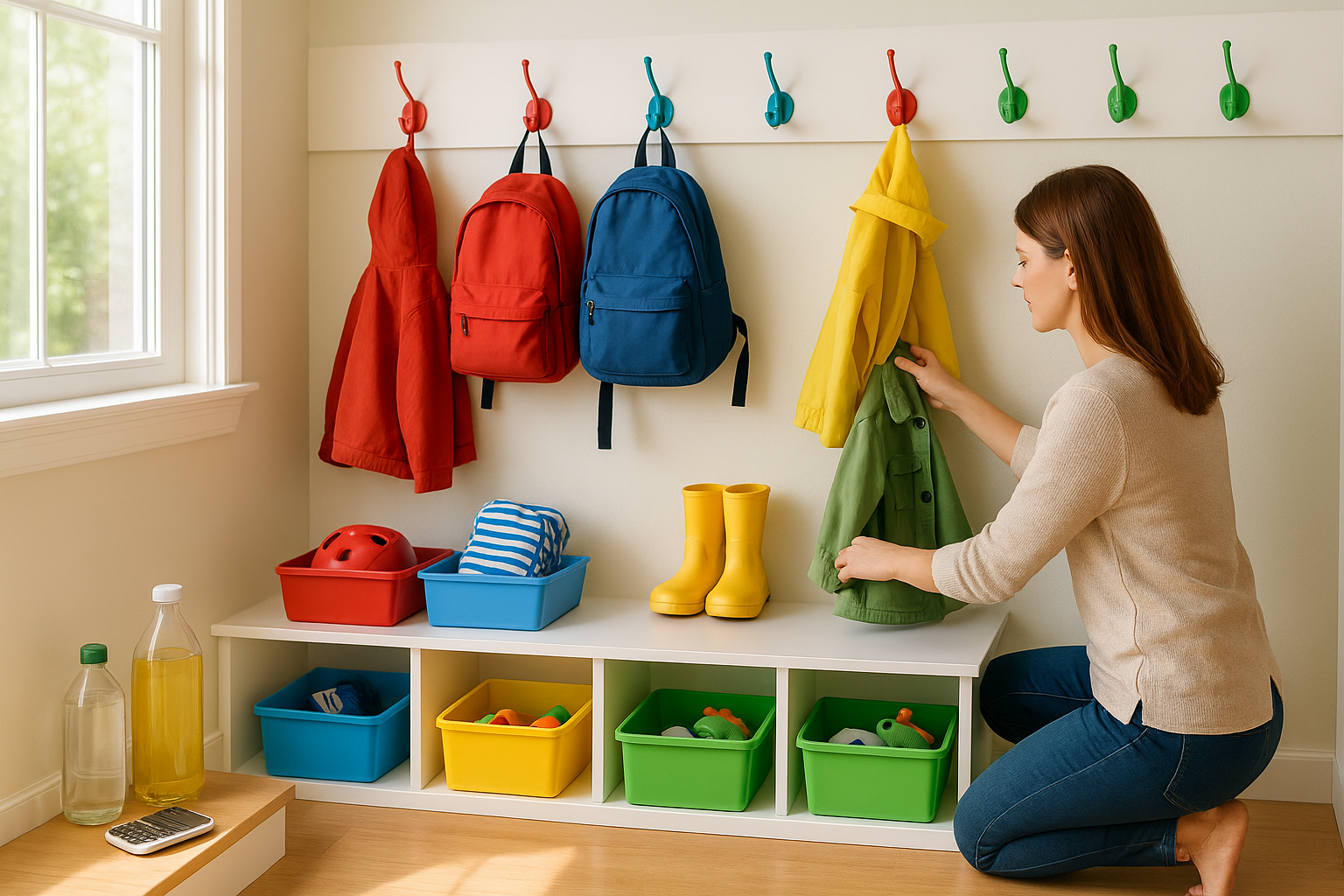
For items you can’t mark permanently, use colored bins, hooks, or designated spaces. Each child gets their color hook by the door, their color bin for sports equipment, their color shelf in the bathroom. The color coded organization kids system works best when the color connection is immediately obvious.
Take photos of the colored items and post them where kids can see them if needed. A visual reference helps younger kids remember which color belongs to whom and eliminates the “I forgot” excuse.
Step 4: Establish Clear Ownership Rules
Create simple rules about color responsibility that everyone understands. If it’s your color, it’s your job to clean up, put away, and take care of. No exceptions, no negotiations, no asking siblings to handle your color items.
Make consequences automatic and logical. Red cup left on the table means red-color child clears the table after dinner. Blue towel on the floor means blue-color child is responsible for hanging up everyone’s towels for the week.
Don’t rescue kids from natural consequences of ignoring their color coded organization kids responsibilities. When they can’t find their water bottle because they left it somewhere random, don’t help them search. They’ll learn to keep track of their color items quickly when the consequences affect them directly.
Step 6: Create Positive Reinforcement for the System
Once your color coded organization kids system is running smoothly, add rewards that reinforce good habits. I do weekly “color champion” recognition for whoever kept track of their color items best, which creates friendly competition instead of resentment.
Consider color-specific privileges or treats tied to responsible behavior. The child who goes a full week without abandoning their color items gets to choose the family movie, pick dinner one night, or earn extra screen time.
Make sure rewards focus on the behavior you want to see more of – keeping track of belongings, cleaning up after themselves, and helping maintain the household system everyone benefits from.
Once the basic color coded organization kids system is working smoothly, add more categories slowly. Lunch boxes, sports equipment, school supplies, and bedroom organization are natural next steps.
Pay attention to what causes the most arguments or confusion in your house and prioritize those items for color coding. Every family has different trouble spots – maybe it’s art supplies, maybe it’s outdoor toys, maybe it’s electronic devices.
Step 5: Expand the System Gradually
Why This Color Coded Organization Kids System Works So Well
Look, I’m not going to pretend this color coded organization kids approach turned my children into naturally organized beings who never leave messes (that would require actual magic). But it solved the biggest problems that were making me feel like a referee in my own home:
Eliminates ownership arguments. When everything has a clear color assignment, there’s no debate about who’s responsible. The evidence speaks for itself, and kids can’t claim ignorance or blame siblings.
Creates automatic accountability. Kids learn quickly that their color means their responsibility. They become more aware of their belongings and more careful about where they leave things.
Reduces parental detective work. You don’t have to investigate whose mess is whose or track down owners of abandoned items. The color tells you everything you need to know.
Teaches natural consequences. When kids face direct consequences for not managing their color items, they learn responsibility faster than any amount of lecturing could achieve.
Builds family teamwork. Everyone has their role and responsibility, which creates a sense of contributing to the household instead of just being served by parents.
Common Color Coded Organization Kids Mistakes (That I Definitely Made)
Trying to color-code too many things at once. I got excited about the concept and went overboard, assigning colors to every possible item in the house. Kids got overwhelmed and the system collapsed because they couldn’t remember what was supposed to be their responsibility.
Choosing colors that are too similar. My first attempt used pink and red, which caused constant arguments about whether something was supposed to be the pink kid’s or the red kid’s responsibility. Stick with clearly different colors.
Not making the color marking permanent enough. I started with removable stickers that fell off after a few washes. When the color indicators disappear, the system falls apart and you’re back to mystery ownership.
Rescuing kids from natural consequences. When my son couldn’t find his blue water bottle, I helped him search instead of letting him deal with being thirsty. That taught him that mom would solve the problem, not that he needed to keep track of his stuff.
Forgetting to include myself in the system. I assigned colors to kids but kept my own items neutral, which sent the message that organization was just for children. Including yourself shows that everyone has responsibilities.
What About Guests and Shared Items?
Not everything in your house needs to be part of the color coded organization kids system. Guests can use neutral items, and some things naturally belong to the whole family. The key is being intentional about what gets color-coded based on what causes problems.
For items that multiple kids share, like board games or art supplies, use a neutral color or designate them as “family” items that everyone is responsible for maintaining. Don’t force the color system onto things that work fine without it.
When friends come over, explain the basic color system so they understand why your kids have specific cups or towels. Most kids think the color coding is cool and wish their families used a similar system.
Handling Resistance and Rule Testing
Kids will absolutely test the boundaries of your color coded organization kids system, especially older kids who might feel like color assignments are “babyish.” Stay consistent with consequences and don’t get drawn into arguments about the fairness of the system.
When kids complain that their color is ugly or they want to trade colors, remind them that the color is about responsibility, not fashion preference. The system works because it’s consistent, not because everyone loves their assigned color.
Younger kids might genuinely forget their color assignments initially. Use gentle reminders and visual cues instead of consequences until the system becomes habit. Once they know the system, hold them accountable for following it.
The Color Coded Organization Kids Reality Check
Will this color coded organization kids system eliminate every single argument about belongings and responsibility? Of course not – kids will find new things to argue about because that’s what kids do. Will it solve the specific problems of mystery messes and ownership disputes? Absolutely.
The goal isn’t creating perfectly organized children who never make mistakes. The goal is establishing clear expectations and automatic accountability that reduces parental frustration and teaches kids valuable life skills.
I still find the occasional item in the wrong place, but now there’s no mystery about who’s responsible for dealing with it. That’s a huge improvement from the days of playing detective and mediating ownership disputes over identical cups.
Starting Your Color Coded Organization Kids System
Begin with one category of items that causes the most daily frustration. For most families, cups or water bottles are good starting points because they’re used constantly and frequently abandoned.
Involve kids in setting up the system by letting them help mark their items or organize their color-coded spaces. Ownership of the setup process increases buy-in and compliance with the rules.
Give the system time to become habit before adding more categories. Kids need consistency and practice to internalize the color assignments and the responsibility that comes with them.
Advanced Color Coded Organization Kids Strategies
Once the basic system is working, you can expand to more sophisticated applications. Color-coded chore charts, allowance tracking, or even family calendar systems can build on the foundation you’ve established.
Consider using the color system for positive reinforcement too. Color-specific rewards, privileges, or special family responsibilities can make the color assignment feel like membership in an exclusive club rather than just another rule.
Some families expand the color system to include extended family members or regular caregivers, creating consistency across different environments where kids spend time.
The color coded organization kids approach isn’t about controlling every aspect of your children’s lives or turning your home into a regimented institution. It’s about creating clarity and accountability that benefits everyone while teaching kids valuable lessons about personal responsibility and family cooperation.
Because life’s too chaotic to spend your days playing detective over mystery messes when you could have a simple system that makes responsibility automatic and arguments impossible.