
Table of Contents
If you’re living in a house where every single weeknight turns into a frantic vegetable chopping marathon while your family asks when dinner will be ready approximately every thirty seconds, and you’ve somehow turned the simple act of making a salad into a forty-minute production that involves crying over onions while your pasta boils over because you’re trying to dice vegetables and monitor seventeen different cooking processes simultaneously, this meal prep vegetables system is for you.
You know that special kind of weeknight exhaustion where you get home from work already mentally drained, open the refrigerator to find perfectly good vegetables that somehow seem impossibly overwhelming because they require actual knife work, and suddenly ordering pizza feels like the only rational response to the prospect of washing, peeling, chopping, and dicing your way through dinner prep.
I used to buy beautiful fresh vegetables every weekend with the best intentions, then watch them slowly rot in my crisper drawer because weeknight me couldn’t handle the gap between “I should make a healthy dinner” and “holy hell this requires chopping seventeen different things and I haven’t even started cooking yet.” By Wednesday, I’d be staring at expensive organic bell peppers that had turned into science experiments while my kids ate cereal for dinner again.
Here’s what saved me from becoming the woman who buys vegetables just to compost them: I stopped trying to prep fresh vegetables during the dinner rush and started using a strategic meal prep vegetables system that front-loads all the tedious work into one weekend session. This isn’t about becoming a meal prep influencer with perfect glass containers – this is about transforming weeknight cooking from a vegetable nightmare into actual manageable meal preparation.
Why Meal Prep Vegetables Strategy Actually Works
Look, I tried those elaborate meal prep systems where you’re supposed to cook seventeen different dishes on Sunday and portion them into Instagram-worthy containers. I lasted exactly one weekend before deciding that spending my entire Sunday cooking was just trading one form of kitchen stress for another, more intense form of kitchen stress.
A focused meal prep vegetables approach works because it addresses the specific bottleneck that makes weeknight cooking feel impossible – the tedious prep work that stands between you and actually getting food on the table. When your vegetables are already chopped and ready to go, cooking becomes about combining ingredients instead of spending forty minutes with a knife while everything else burns.
The biggest advantage of meal prep vegetables? It transforms those “I should cook something healthy but everything requires so much work” moments into “I can throw this together in ten minutes” victories.
My Pre-Meal Prep Vegetables Disaster Chronicles
Let me tell you about “The Great Stir-Fry Catastrophe of Last Tuesday.” I’d planned this beautiful vegetable stir-fry – had all the ingredients, felt very proud of my healthy dinner planning. Started cooking at 5:45 PM because how long could chopping a few vegetables take, right?
Wrong. So incredibly wrong.
First, the onion made me cry so hard I couldn’t see what I was doing. Then I realized I’d never actually cut a bell pepper efficiently in my life and was creating these weird, uneven chunks while my oil got too hot and started smoking. The broccoli needed to be broken into florets, which apparently takes approximately forever when you’re doing it wrong, and somewhere in the middle of wrestling with a stubborn carrot, my rice boiled over and set off the smoke alarm.
By 6:30, my kitchen looked like a produce explosion had occurred, I had onion-crying mascara running down my face, and my family was staring at me like I was having some kind of culinary breakdown. Which, honestly, I was. We ended up eating scrambled eggs and toast because it was literally the only thing I could manage without additional vegetable warfare.
But the real breaking point was “The Sunday Night Panic Prep.” I’d decided to meal prep on Sunday evening like a responsible adult, but started at 7 PM because I’d procrastinated all day. Spent three hours washing, chopping, and storing vegetables while my kids ran feral through the house and I questioned every life choice that led me to standing in my kitchen at 10 PM still cutting celery.
That’s when I realized the problem wasn’t meal prep vegetables themselves – it was my complete lack of strategy for doing it efficiently without losing my entire weekend or my sanity.
The Ultimate 6-Step Meal Prep Vegetables System
This approach focuses on maximum efficiency and minimum weekend time investment while setting you up for weeknight success. Here’s my 6-step meal prep vegetables system that actually works:
Step 1: Strategic Shopping for Meal Prep Vegetables
Buy vegetables specifically for prep, not just whatever looks good. Focus on versatile vegetables that hold up well after chopping – onions, bell peppers, carrots, celery, broccoli, and zucchini are meal prep vegetables superstars that stay fresh and work in multiple dishes.
Choose vegetables that you actually use regularly in your meal prep vegetables system. Don’t buy exotic vegetables just because they seem healthy – buy the ones your family will eat and that appear in your go-to recipes consistently.
Shop with prep time in mind. Vegetables that require minimal washing and simple chopping (like bell peppers) are easier to prep in large quantities than fussy vegetables that need individual attention.
Step 2: Set Up Your Meal Prep Vegetables Workspace
Clear your entire counter and get out every tool you’ll need before you start: sharp knives, cutting boards, storage containers, and a large bowl for scraps. Having everything ready prevents mid-prep scrambling that turns organized sessions into chaotic disasters.
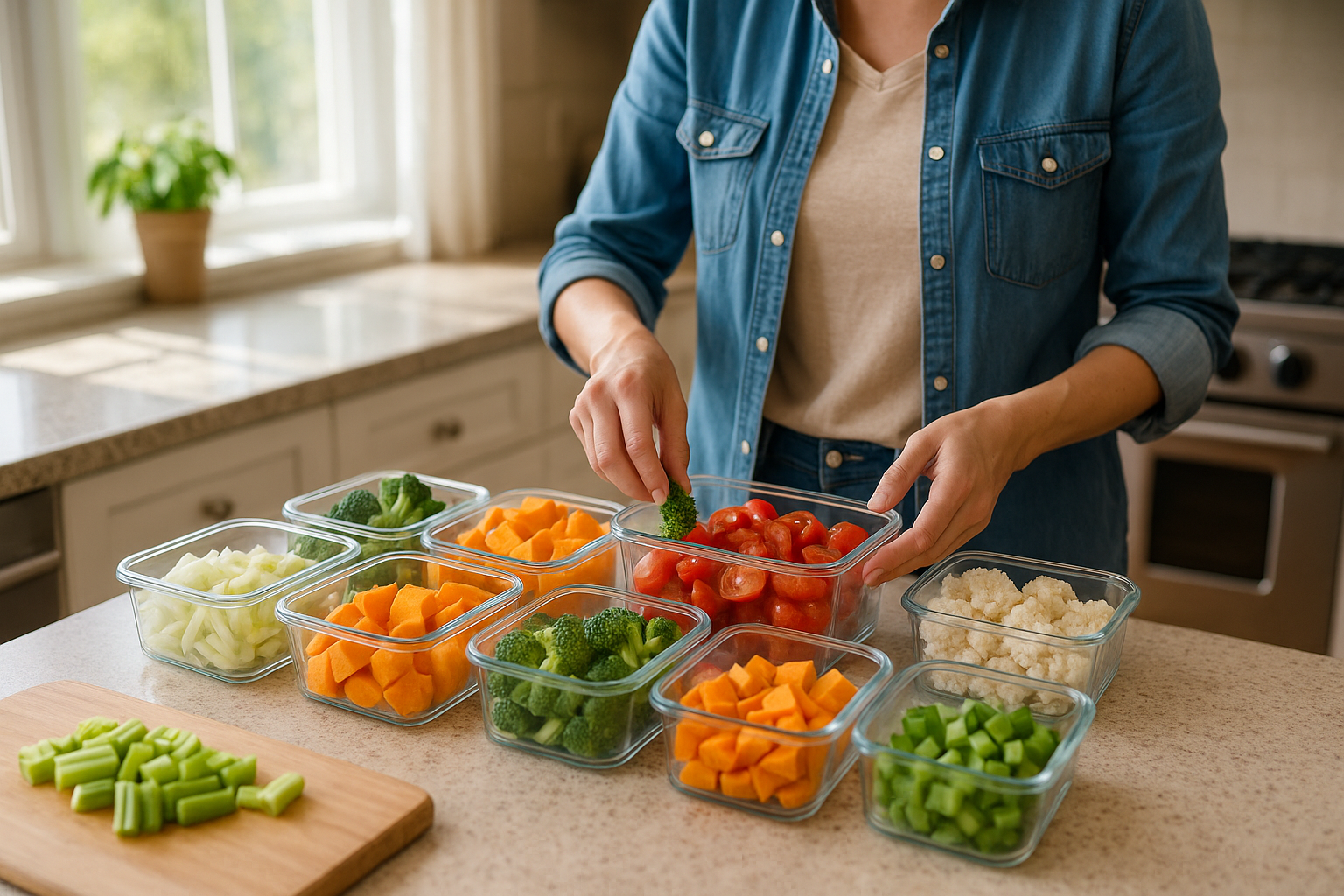
Line up containers for different types of meal prep vegetables – separate containers for onions, peppers, quick-cooking vegetables, and slow-cooking vegetables. Organization during prep saves time during cooking all week.
Put on music or a good podcast because meal prep vegetables sessions go much faster when you’re not focused solely on the repetitive chopping. Entertainment makes the work feel less like kitchen drudgery.
Step 3: Wash Everything First
Start your meal prep vegetables session by washing ALL vegetables at once before you begin any chopping. This prevents the stop-and-start workflow that happens when you’re washing as you go and keeps your workspace cleaner.
Use a salad spinner for leafy greens and anything that needs thorough drying. Wet vegetables don’t store as well and can make your meal prep vegetables system less successful throughout the week.
Pat dry anything that holds water – tomatoes, zucchini, and peppers – because excess moisture creates soggy storage situations that ruin your beautiful prep work by Wednesday.
Step 4: Chop with Strategy, Not Speed
Cut meal prep vegetables to sizes that make sense for your actual cooking methods. If you mostly sauté vegetables, cut them smaller. If you roast them, larger chunks work better. Think about how you’ll actually use them instead of defaulting to one uniform size.
Group similar vegetables together during chopping – do all your onions at once, then all your peppers. This prevents flavor transfer and makes the process more efficient than jumping between different vegetables randomly.
Save strong-smelling vegetables like onions and garlic for last in your meal prep vegetables session. Your hands and cutting board will thank you, and you won’t transfer onion flavor to everything else you’re prepping.
Step 5: Storage That Actually Preserves Freshness
Use appropriate containers for different meal prep vegetables types. Glass containers work well for most chopped vegetables, but some (like cut onions) need airtight containers to prevent flavor transfer to other foods in your refrigerator.
Don’t overcrowd containers – vegetables need some air circulation to stay fresh. Better to use multiple containers than to pack everything so tightly that bottom vegetables get crushed and start rotting.
Label containers with contents and prep date. Even if you think you’ll remember what’s in each container, by Thursday you’ll be grateful for the labels when you’re trying to grab ingredients quickly.
Step 6: Strategic Storage for Maximum Meal Prep Vegetables Success
Store meal prep vegetables at the front of your refrigerator where you’ll see them and remember to use them. Out of sight equals out of mind, which equals wasted prep work and rotting vegetables.
Keep frequently used meal prep vegetables at eye level and easy reach. If you have to dig through the refrigerator to find your prepped onions, you’re less likely to use them for quick weeknight cooking.
Plan your weekly meals around your meal prep vegetables to ensure everything gets used before it spoils. The whole system falls apart if you prep vegetables and then don’t actually incorporate them into your cooking routine.
Why This Meal Prep Vegetables System Works So Well
Look, I’m not going to pretend that spending two hours chopping vegetables on Sunday turned me into some kind of weeknight cooking goddess who never feels stressed about dinner (I still have moments of opening my refrigerator and feeling overwhelmed by choices). But it solved the specific problems that were making weeknight cooking feel impossible:
Eliminates weeknight prep paralysis. When vegetables are already chopped, the barrier between “I should cook something healthy” and “I’m actually cooking something healthy” disappears completely.
Transforms cooking time from prep-heavy to assembly-focused. Instead of spending forty-five minutes washing and chopping before you can even start cooking, you spend ten minutes combining prepped ingredients into actual meals.
Reduces food waste dramatically. Meal prep vegetables get used because they’re convenient, not because you have good intentions about using fresh produce that requires work to become edible.
Makes healthy eating realistic on busy weeknights. When adding vegetables to meals requires zero additional prep time, you actually do it instead of defaulting to processed foods that come pre-prepared.
Creates cooking momentum instead of cooking dread. Starting dinner with ingredients that are ready to go makes the whole process feel manageable instead of overwhelming before you begin.
Common Meal Prep Vegetables Mistakes (That Wasted My Time and Money)
Prepping vegetables I don’t actually use regularly. I spent one Sunday chopping vegetables for recipes I’d never made, then watched them rot because my meal prep vegetables didn’t match my actual cooking habits.
Not considering storage life when choosing what to prep. Some vegetables lose quality quickly after chopping – mushrooms get slimy, avocados brown immediately, and cut tomatoes get watery. Focus your meal prep vegetables efforts on things that actually improve with advance preparation.
Chopping everything to the same size regardless of cooking method. Tiny diced onions are perfect for sautéing but terrible for roasting, while large pepper chunks work great roasted but take forever to cook in stir-fries.
Using inappropriate storage containers. Storing cut onions in containers that don’t seal properly makes your entire refrigerator smell like onions, while using containers that are too small means your beautiful prep work gets crushed and damaged.
Not planning meals around prepped vegetables. The most perfectly prepped meal prep vegetables in the world won’t help if you don’t actually use them in your weeknight cooking routine.
Customizing Your Meal Prep Vegetables Strategy
Your meal prep vegetables system should reflect your actual cooking patterns, not some idealized version of how you think you should cook. If you make a lot of soups, focus on prepping soup vegetables. If you’re always making stir-fries, prep stir-fry vegetables.
Consider your family’s preferences when choosing meal prep vegetables. Don’t prep vegetables that half your family won’t eat – focus on universally accepted vegetables that appear in multiple family-friendly recipes.
Scale your meal prep vegetables efforts to match your reality. If you only cook fresh meals three nights a week, don’t prep vegetables for seven nights of cooking. Better to have a successful small system than an overwhelming large system that you abandon.
Building Meal Prep Vegetables Into Your Weekly Routine
Choose a consistent time for your meal prep vegetables session – weekend mornings work well because you’re fresh and have natural energy for tasks that require focus and knife work.
Batch your meal prep vegetables with other kitchen tasks like cleaning out the refrigerator or planning the week’s meals. Grouping kitchen tasks together makes the time investment feel more worthwhile.
Start small with your meal prep vegetables system – maybe just prep onions and peppers the first week. Adding one type of prepped vegetable at a time lets you build the habit without overwhelming yourself.
The Meal Prep Vegetables Reality Check
Will spending time prepping vegetables on weekends eliminate all weeknight cooking stress and turn you into a efficient meal preparation machine? Of course not – cooking will always require time and energy, and some weeks life will interfere with even the best plans. Will it remove the specific bottleneck that makes weeknight cooking feel impossible? Absolutely.
The goal of meal prep vegetables isn’t becoming a meal prep perfectionist or spending your entire weekend in the kitchen. The goal is front-loading the tedious work that stands between you and actually getting healthy meals on the table during busy weeknights.
I still have weeks where I don’t prep anything and we eat more takeout than I’d like, but now those are exceptions rather than my default dinner strategy. Having meal prep vegetables ready makes cooking feel possible instead of overwhelming.
Advanced Meal Prep Vegetables Techniques
Once your basic system is working, you can expand with techniques like blanching vegetables for longer storage, freezing prep work for future weeks, or coordinating your meal prep vegetables with batch cooking proteins.
Some families benefit from seasonal meal prep vegetables strategies – focusing on heartier vegetables during winter months and lighter, quicker-cooking vegetables during summer when you want minimal kitchen time.
Consider investing in better storage solutions or prep tools that make your meal prep vegetables sessions more efficient – quality knives, mandoline slicers, or vacuum storage systems that extend freshness.
The meal prep vegetables system isn’t about becoming a kitchen efficiency expert or eliminating all cooking spontaneity from your life. It’s about creating a foundation that makes weeknight cooking feel manageable instead of overwhelming, so you can actually feed your family healthy meals without losing your sanity in the process.
Because life’s too busy to spend every weeknight crying over onions when you could do all the crying once on Sunday and enjoy the convenience of pre-chopped vegetables that turn cooking from drudgery into something you might actually have time to enjoy.